How to Avoid Burnout as a Freelancer
You took the leap into freelancing for freedom and flexibility. But somewhere between chasing invoices, juggling three clients, and working past midnight on a Sunday, that freedom started to feel like a trap. If this sounds familiar, you are not alone. Research shows that 43% of freelancers experience burnout, and the World Health Organization now classifies it as an occupational syndrome caused by chronic, unmanaged work stress. Learning how to avoid burnout as a freelancer starts with understanding what it looks like — and recognizing the signs you are overworking before things escalate.
What Freelance Burnout Actually Looks Like
Burnout does not always announce itself with a dramatic crash. It often creeps in slowly, disguised as everyday tiredness or a vague sense of dread about work you used to enjoy.
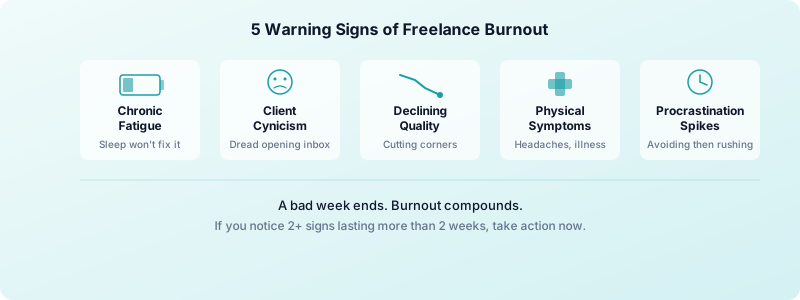
Watch for these warning signs:
- Chronic fatigue that sleep does not fix. You wake up tired even after a full night of rest.
- Cynicism toward clients. Projects that once excited you now feel like obligations. You dread opening your inbox.
- Declining quality. You catch yourself cutting corners or missing details you would have caught three months ago.
- Physical symptoms. Persistent headaches, muscle tension, frequent illness, and disrupted sleep all correlate with chronic stress.
- Procrastination spikes. You spend more time avoiding work than doing it, then scramble to meet deadlines at the last minute.
The difference between a bad week and burnout is duration. A bad week ends. Burnout compounds. Left unchecked, it leads to lost clients, damaged reputation, and health problems that take months to recover from.
Why Freelancers Are More Prone to Burnout
Traditional employees have built-in guardrails: fixed schedules, paid vacation, managers who notice when someone is struggling, and coworkers who share the load. Freelancers have none of that.
Three structural factors make freelancers especially vulnerable:
No separation between work and life. When your home is your office and your phone is your time clock, work never fully stops. The average freelancer works 40 hours per week, but many regularly exceed 50. Without clear boundaries, you exist in a constant state of low-level work presence that prevents true recovery.
Feast-or-famine cycles. Freelancers swing between having too little work (financial stress) and too much work (capacity stress). During feast periods, you say yes to everything because famine is still fresh in your memory. That overcommitment is where burnout starts.
Isolation. Working without a team means you miss the psychological buffer that coworkers provide. There is no one to notice you are struggling, share the workload, or simply commiserate over a difficult client. Isolation amplifies every other stressor.
Understanding these structural risks is the first step. Protecting your freelance mental health requires building systems that counteract them.
Five Practical Ways to Prevent Freelance Burnout
Preventing burnout is not about working less. It is about working smarter and protecting your recovery time with the same discipline you bring to client work.
1. Use the 70-30 Rule for Your Schedule
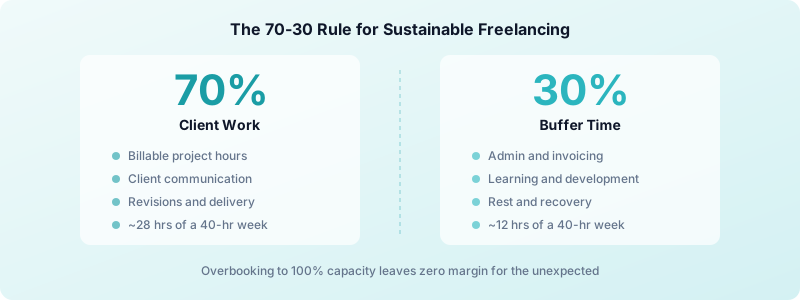
Fill 70% of your available hours with client work. Leave the remaining 30% open for admin, personal development, unexpected opportunities, and rest. If you have 40 hours available per week, cap billable client work at 28 hours.
This buffer prevents the cascade effect where one overdue project dominates your entire week and pushes everything else into evenings and weekends.
2. Set Non-Negotiable Boundaries
Pick a hard stop time each day and stick to it. Remove work email from your phone after hours. Define which days you take client calls and which days are for deep work.
Boundaries feel risky when you are worried about losing clients, but the opposite is true. Clients respect freelancers who protect their time because it signals professionalism and reliability. If you need help structuring your day, check out these freelance time management tips for a complete framework.
3. Be Selective About Clients
Not all revenue is good revenue. A single difficult client who ignores boundaries, demands revisions at midnight, and pays late can drain more energy than three respectful clients combined.
Audit your current client list. If a client consistently causes stress that outweighs the income, it is time to raise your rate, renegotiate the terms, or part ways. Your mental health has a dollar value, and it is higher than you think.
4. Build Financial Buffer
Income anxiety is one of the biggest burnout accelerators. When every invoice feels urgent because rent depends on it, you cannot make rational decisions about workload.
Aim to save three months of living expenses as a freelance emergency fund. This buffer gives you the confidence to say no to projects that do not fit, take time off when you need it, and ride through slow periods without panic.
5. Schedule Recovery Like a Deliverable
Put rest on your calendar. Block out lunch breaks, workout time, and at least one full day off per week. Treat these blocks with the same commitment you give client deadlines.
Recovery is not lazy. It is maintenance. The freelancers who sustain long careers are the ones who build recovery into their operating system, not the ones who grind until they collapse.
How Time Tracking Helps You Spot Burnout Early
Burnout rarely arrives without warning. The data is usually there weeks before you feel it. The problem is that most freelancers do not track the right numbers.
When you track your billable hours consistently, you create an early warning system:
- Hours creeping up week over week. If your weekly total climbs from 35 to 40 to 48 over a month, you are on a burnout trajectory even if you feel fine right now.
- Billable ratio dropping. When your tracked hours are high but your billable percentage is falling, you are spending more time on admin, revisions, and scope creep. That is a sign you need to renegotiate or reorganize.
- Weekend and evening entries appearing. If your time logs show regular work outside your defined hours, your boundaries are eroding.
- Single-client domination. When one client accounts for more than 50% of your weekly hours, you have a concentration risk. If that client is also your most stressful, burnout is around the corner.
Toggle Time Tracker makes this kind of self-monitoring effortless. Tag your time by project, review your weekly reports, and watch for the patterns listed above. Because it works offline and requires no account, there is zero friction between deciding to track and actually doing it.
The freelancers who catch burnout early are the ones who look at their data honestly. A time tracker does not lie about how many hours you actually worked last week.
Building a Sustainable Freelance Routine
Avoiding burnout is not a one-time fix. It is a set of habits you maintain every week. If you need help structuring your entire workday, start with a freelance daily routine that works. Here is a simple routine that puts the strategies above into practice:
Sunday evening (15 minutes): Review last week's time data. Check your total hours, billable ratio, and client distribution. Flag anything that looks off.
Monday morning (10 minutes): Plan your week using the 70-30 rule. Block client work, admin time, and recovery periods.
Daily (2 minutes): Start your timer when you begin work. Stop it at your hard-stop time. Toggle Time Tracker handles this with a single tap.
Friday afternoon (10 minutes): Audit your energy. Rate the week on a 1-10 scale. If you drop below 6 for two consecutive weeks, something needs to change before it becomes burnout.
Techniques like the Pomodoro method can help you stay focused during work blocks without pushing past your limits. Short, timed sprints with built-in breaks are a natural burnout prevention tool.
The freelancers who last are not the ones who work the hardest. They are the ones who build systems that protect their energy while still delivering great work. A healthy freelancer work life balance does not happen by accident. Start tracking, set your boundaries, and treat sustainability as a core business strategy.
Download Toggle Time Tracker and start monitoring your work patterns before burnout has a chance to take hold.