How to Build a Freelance Daily Routine That Works
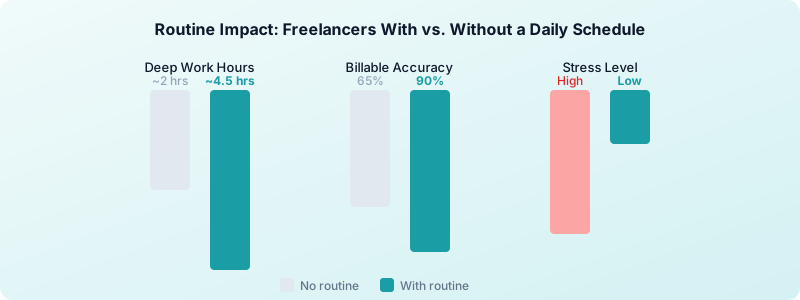
Freedom is the number one reason people go freelance. But that same freedom can turn into chaos if you do not have a freelance daily routine schedule to anchor your day. Without a boss or coworkers keeping you accountable, every hour is yours to use or waste. Freelancers who follow a consistent daily routine bill 20-30% more accurately and report higher satisfaction. The good news: building a routine that works is simpler than you think.
Why Freelancers Need a Daily Routine
Employees have structure handed to them. Meetings, lunch breaks, and clock-out times are baked into the workday. Freelancers start each morning with a blank slate, and that blank slate is both a gift and a trap.
Without a routine, you waste decision energy on questions that should be automatic:
- When do I start working?
- Which project do I tackle first?
- When do I take breaks?
- When do I stop for the day?
Every one of those micro-decisions drains mental bandwidth that could go toward actual work. A daily routine eliminates them. You decide once, then follow the plan.
A solid routine also protects your boundaries. When you know your day ends at 5:30 PM, you are less likely to say yes to a late-afternoon client call that bleeds into your evening. That kind of boundary-setting is a key part of avoiding burnout as a freelancer.
How to Design Your Ideal Freelance Schedule
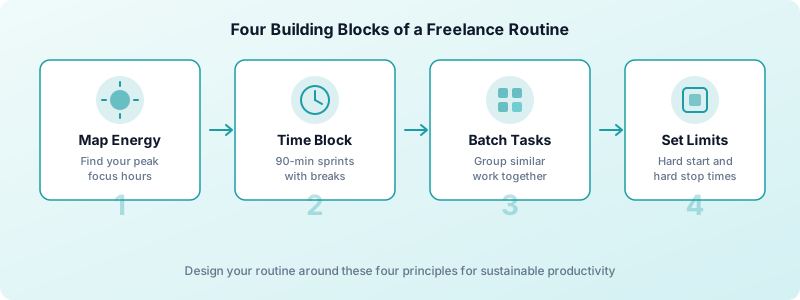
There is no single perfect schedule. The right freelance daily routine depends on your energy patterns, client needs, and personal life. But every effective routine shares four building blocks.
1. Map Your Peak Energy Hours
Track your energy levels for one week. Note when you feel sharp versus sluggish. Most people hit peak focus between 9 AM and noon, but your pattern might be different.
Once you know your peak hours, protect them for your hardest work. Client deliverables and creative tasks belong here. Save email and admin for low-energy windows.
2. Time Block in 90-Minute Sprints
Your brain can sustain deep focus for about 90 minutes before it needs a reset. Structure your day around 90-minute work blocks followed by 15-minute breaks.
If 90 minutes feels too long, try the Pomodoro technique with 25-minute sprints and 5-minute breaks. The key is working in defined chunks rather than open-ended marathons.
3. Batch Similar Tasks Together
Context switching kills productivity. Every time you jump from writing a proposal to answering emails to editing a design, your brain needs 15-25 minutes to fully re-engage. Batching similar tasks together minimizes these transition costs.
Group your day into themes:
- Deep work blocks: Client projects, writing, design, coding
- Communication blocks: Email, Slack, client calls
- Admin blocks: Invoicing, bookkeeping, marketing
4. Set a Hard Start and Hard Stop
Pick a consistent start time and end time. Write them down. Treat them as non-negotiable. A hard stop is especially important because freelance work expands to fill whatever time you allow it. For more strategies on structuring your time, explore these freelance time management tips that actually work.
A Sample Freelance Daily Routine
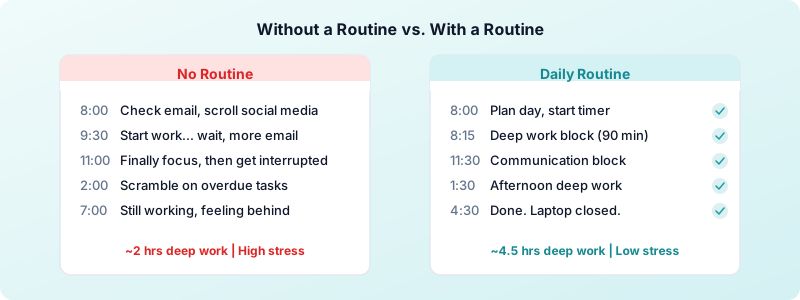
Here is a practical template you can adapt to your own schedule. This assumes a 7-8 hour workday with peak energy in the morning.
7:00 AM - Morning routine. Wake up, exercise or walk, eat breakfast. No screens for the first 30 minutes.
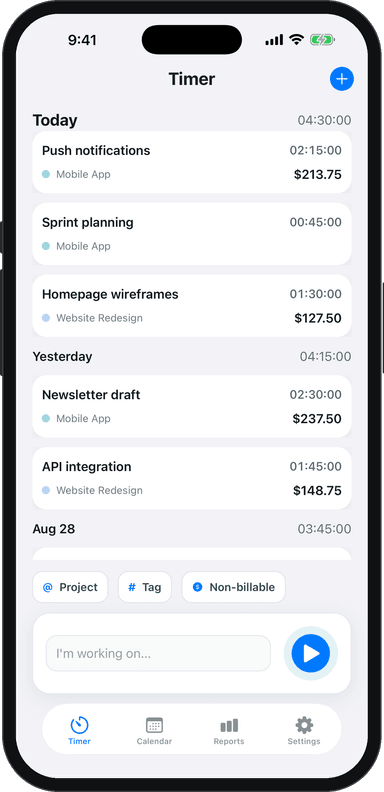
8:00 AM - Plan the day (15 min). Review your task list, pick your top three priorities, and start your timer in Toggle Time Tracker.
8:15 AM - Deep work block 1 (90 min). Tackle your most important client project. No email, no distractions.
9:45 AM - Break (15 min). Step away from your desk. Stretch, get coffee, look out a window.
10:00 AM - Deep work block 2 (90 min). Continue client work or move to your second-priority task.
11:30 AM - Communication block (60 min). Process email, respond to client messages, join scheduled calls.
12:30 PM - Lunch (60 min). Eat away from your desk. A real break, not a working lunch.
1:30 PM - Deep work block 3 (90 min). Afternoon client work. If energy dips, switch to lighter tasks.
3:00 PM - Admin block (60 min). Invoicing, bookkeeping, marketing. Review your tracked time in Toggle Time Tracker.
4:00 PM - Wrap-up (30 min). Review what you accomplished and update tomorrow's task list. Stop your timer.
4:30 PM - Done. Close your laptop. Your workday is over.
This gives you roughly 4.5 hours of deep work, which is the maximum most people can sustain. Adjust the times to fit your life, but keep the proportions similar.
The first hour usually decides the rest. A freelance morning routine for productivity covers how to structure it.
Common Routine Mistakes Freelancers Make
Even with a solid plan, certain habits sabotage your freelance work schedule. Watch out for these:
Starting the day with email. Checking email first puts you in reactive mode. Other people's priorities take over before you touch your own work. Save email for your communication block.
Skipping breaks. Working straight through leads to diminishing returns after 90 minutes. Short breaks actually increase total output.
Over-scheduling every minute. Leave buffer time between blocks. A schedule packed to 100% capacity breaks at the first surprise.
Not tracking your time. You cannot improve what you do not measure. Track your hours for at least two weeks to see where time really goes.
Changing your routine every week. A decent routine followed for 30 days beats a perfect routine abandoned after three. Give any new schedule at least two weeks before tweaking it.
How to Stick to Your Routine Long Term
Building a freelance daily routine schedule is the easy part. Following it when motivation fades is where most freelancers struggle. These strategies help you stay consistent.
Start small. Do not overhaul your entire day at once. Pick one change, like a consistent start time, and nail it for two weeks before adding the next piece.
Use a timer as your accountability partner. When you hit start on your timer, you signal to your brain that work has begun. When you stop it, work is over. Toggle Time Tracker makes this a one-tap habit. Because it works offline and needs no account, there is nothing standing between you and the data you need.
Review weekly. Every Friday, spend 10 minutes looking at your time data. Did you follow your routine? Where did you deviate? What caused it? Weekly reviews turn a static schedule into a living system that adapts to your reality.
Forgive bad days. You will have days where the routine falls apart. That is normal. The goal is not perfection. The goal is returning to your routine the next day without guilt.
Protect your shutdown time. Make the end of your workday a ritual: close your laptop, review your time log, and write tomorrow's top three tasks. Once the ritual is done, you are off the clock.
The freelancers who build sustainable careers treat their freelance daily routine schedule as a professional tool, not a rigid cage. Track your time, review the data, and adjust until you find the rhythm that fits your life and your goals.
Download Toggle Time Tracker and start building the daily routine data that shows you exactly where your hours go.