Value-Based Pricing for Freelancers: Charge What You're Worth
Most freelancers price their freelance services one of two ways: by the hour or by the project. Both are familiar, easy to explain, and — for a lot of freelancers — quietly keeping their income lower than it should be.
Value-based pricing is a different approach. Instead of asking "how long will this take me?" you ask "what is this worth to the client?" That shift in framing can unlock rates that hourly billing never will.
This guide walks you through what value-based pricing actually is, how to figure out what your work is worth, and how to start having the conversation with clients.
What is value-based pricing?
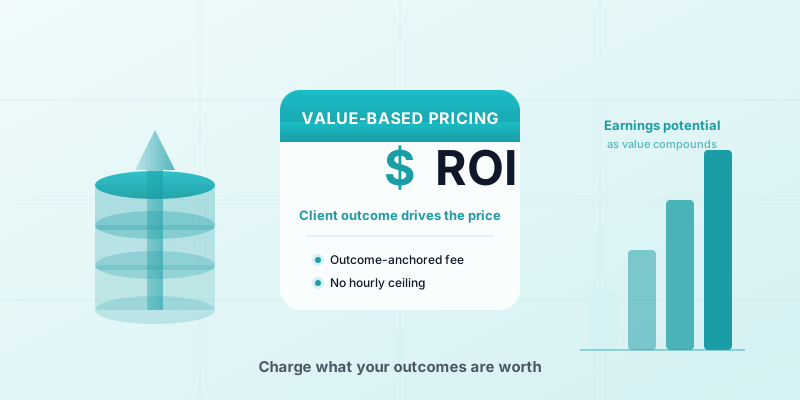
Value-based pricing means setting your price based on the outcome you deliver — the business result your work creates — rather than the time you spend or the scope of deliverables you hand over.
A copywriter charging $150/hour for a sales page isn't using value-based pricing. A copywriter charging $3,500 for that same sales page because it will generate an estimated $40,000 in product sales — that's value-based pricing.
The difference isn't about the work. It's about what the work does.
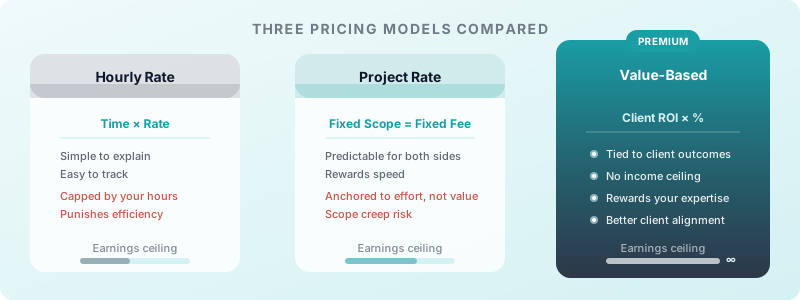
Compare the three common models:
- Hourly rate: You charge for your time. Your income is capped by the hours you can work. Understanding how to calculate your true hourly rate is a useful foundation, but hourly billing doesn't reward you for working efficiently.
- Project rate: You charge a fixed price for a defined scope. Better than hourly for both parties, but the price is still anchored to your estimate of effort — not to the value created.
- Value-based: You price based on what the client stands to gain. There's no ceiling tied to hours or deliverables.
If you've ever wondered whether hourly or project-based pricing makes more sense for your work, value-based pricing is often the natural next step beyond both.
Why value-based pricing benefits everyone
Freelancers often assume that charging more is bad for the client. Value-based pricing flips that assumption.
When your price reflects the value of the outcome, clients think less about your cost and more about their return. A $500 fee feels expensive. A $500 fee that generates $10,000 in revenue feels like a bargain. Same price, completely different conversation.
For you, the benefits are significant. You're no longer punished for getting better and faster at your work. If a task that used to take you 10 hours now takes 4, your hourly revenue goes up — but your client's outcome is the same and they're paying the same. Your skill becomes leverage, not just labor.
Value-based pricing also tends to attract better clients. When someone is focused on outcomes and ROI, they're usually more serious about their business and more willing to invest in quality work.
How to estimate the value you deliver
This is where most freelancers get stuck. "How do I know what my work is worth to the client?"
You ask. Specifically, you ask questions that help both you and the client understand the business value at stake.
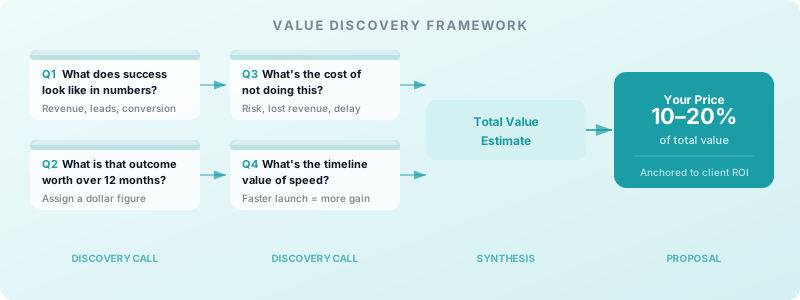
Here are the questions that matter:
What does success look like, in numbers? Ask the client to define a measurable outcome. More leads, higher conversion rate, reduced churn, faster time-to-market. Get specific.
What is that outcome worth over 12 months? A website redesign that increases conversion by 1% might generate an extra $50,000 in annual revenue for a client doing $5M in sales. That number matters.
What's the cost of not doing this? Sometimes the value isn't in the gain — it's in avoiding a loss. A compliance project that prevents a regulatory fine, or a process automation that stops an employee from leaving due to burnout.
What's the timeline value? Faster completion has its own worth. If launching a product two months earlier captures seasonal demand, that time difference has a dollar value.
Once you have a sense of the total value, price your work as a fraction of it. A project worth $50,000 to the client can reasonably command $5,000–$10,000 from you. The exact percentage depends on your confidence in the outcome, the client's risk tolerance, and the competitive landscape — but the key is anchoring the conversation to their number, not yours.
What types of work suit value-based pricing
Not all freelance work is a natural fit. Value-based pricing works best when:
- The outcome is measurable (revenue, leads, cost savings, time saved)
- The client has a clear business goal tied to the project
- You have some track record or confidence in delivering the result
- The project is meaningful in scale — not a $200 fix, but a $2,000+ engagement
It's harder to apply to ongoing retainers with ambiguous deliverables, very small tasks, or work where the client has no real way to measure the outcome.
If you do a mix of project types, you might use value-based pricing for your flagship engagements while keeping hourly or project rates for smaller, more transactional work.
How to have the value-pricing conversation
The approach matters as much as the price. Here's a framework that works.
Start by understanding before pitching. Run a discovery call or intake process focused entirely on the client's goals. Ask the value-discovery questions above. Don't talk price at all on this call.
Reflect the value back to them. In your proposal, open with a summary of what the client wants to achieve and what it's worth to their business. Show you understand their problem, not just the deliverables.
Anchor your price to their outcome. "This project will help you achieve [outcome], which we estimated is worth approximately $X to your business over the next year. My investment for this engagement is $Y." That framing positions your fee as a percentage of their gain, not an abstract number.
Be confident and give them space. Quote the price, explain the value it's tied to, and then be quiet. Silence after a price quote is normal. Let the client process.
If you've been using time tracking data with Toggle Time Tracker, bring that confidence into the conversation. Knowing your actual effective rate — what you've historically earned per hour across similar projects — tells you whether a value-based price is fair to you, not just to the client.
How to transition from hourly to value-based pricing
You don't need to flip a switch. The most sustainable approach is gradual.
Start with new clients. Don't upend existing client relationships immediately. Use value-based framing on your next new prospect. Practice the questions and the proposal format before the stakes are high.
Use your time data as a reality check. Before quoting a value-based price, estimate how many hours the project will likely take. Divide your proposed fee by those hours to get your implied rate. If the number seems reasonable given your market and experience, you're in good shape. If it's wildly inconsistent, reconsider.
Review your effective rate over time. As you land more value-based projects, track your actual hours alongside your fees. Toggle Time Tracker makes it easy to see what you actually earn per hour across different project types — which tells you whether your value-based prices are holding up in practice. This is the same principle as knowing when to raise your rates: data gives you confidence.
Raise your existing client rates in parallel. As you build confidence with value-based framing on new work, revisit your existing client pricing. You don't need to go fully value-based with everyone — even moving from hourly to project-based is a step in the right direction.
The mindset shift that makes it work
Value-based pricing isn't just a pricing tactic. It requires a genuine belief that your work creates real, measurable results for clients.
That belief comes from doing good work, tracking outcomes, and building a record of results you can point to. The more clearly you can connect your work to client outcomes, the easier it becomes to name a number that reflects actual value — and hold it with confidence.
Your rate isn't what you charge per hour. It's what your outcomes are worth.