Hourly vs Project-Based Pricing: Which Is Better for Freelancers?
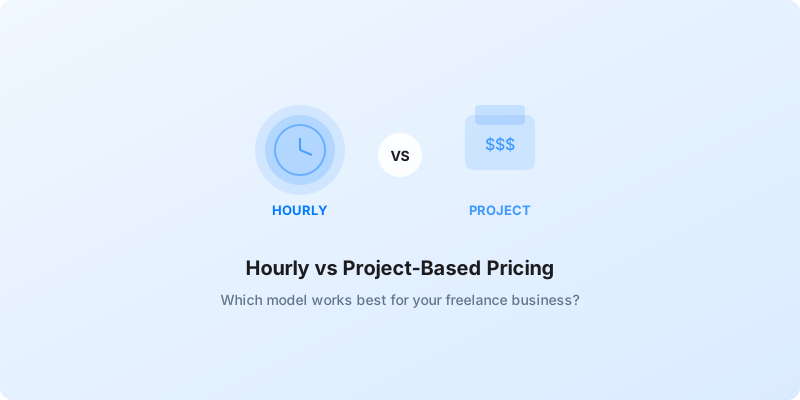
The pricing model debate is one of the most common conversations in freelancing. Should you charge by the hour or by the project? The honest answer: it depends. Each model has genuine strengths, real weaknesses, and specific situations where it works best. If you're still deciding on your overall approach, our guide on how to price freelance services covers all three core models — including value-based pricing.
Here's a clear-eyed look at both approaches, when to use each, and why time tracking remains essential regardless of how you bill.
How hourly pricing works
Hourly pricing is simple: you track the time you spend, multiply by your rate, and invoice the total. The client pays for every hour of your work.
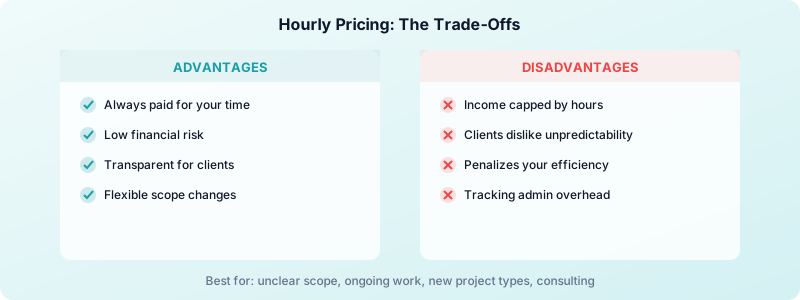
Pros of hourly pricing:
- You always get paid for your time. If a project takes longer than expected — due to scope changes, unclear briefs, or unexpected complexity — you're compensated for every hour.
- Lower risk for you. The financial risk of underestimating sits with the client, not you.
- Transparent. Clients can see exactly what they're paying for. Detailed time logs build trust, especially with new clients.
- Flexible scope. Projects can evolve without renegotiating the price. Need to add a feature? No problem — it just adds hours.
Cons of hourly pricing:
- Income ceiling. Your earnings are capped by the hours you can work. You can't earn more by getting faster.
- Client anxiety. Some clients dislike the unpredictability. They want to know the total cost upfront.
- Penalizes efficiency. If you've done a similar project ten times and can finish it in half the time, you earn half the money. Your expertise actually costs you income.
- Tracking overhead. You need to track every minute accurately, which adds administrative work.
How project-based pricing works
Project-based (or fixed-price) pricing means you quote a flat fee for a defined scope of work. The client pays the same amount regardless of how long it takes you.
Pros of project-based pricing:
- Rewards efficiency. The faster you work, the higher your effective hourly rate. Your expertise is an asset, not a liability.
- Predictable for clients. Clients know exactly what they'll pay, which makes budget approval easier.
- Income potential. No ceiling on your effective rate. A project you can finish in 10 hours at a $2,000 flat fee earns you $200/hour.
- Value-based positioning. You're selling outcomes, not hours. This positions you as a strategic partner rather than a time-for-money vendor.
Cons of project-based pricing:
- Scope creep risk. If the project grows beyond the original brief, you absorb the extra work at no additional pay.
- Estimation pressure. Underestimate the scope and your effective rate plummets. A $2,000 project that takes 50 hours pays $40/hour.
- Requires experience. You need enough projects under your belt to estimate accurately. New freelancers often underquote.
- Harder to adjust. Mid-project changes require scope negotiations, change orders, and sometimes uncomfortable conversations.
When to use each model
Neither model is universally better. The right choice depends on the project type, your experience level, and the client relationship.
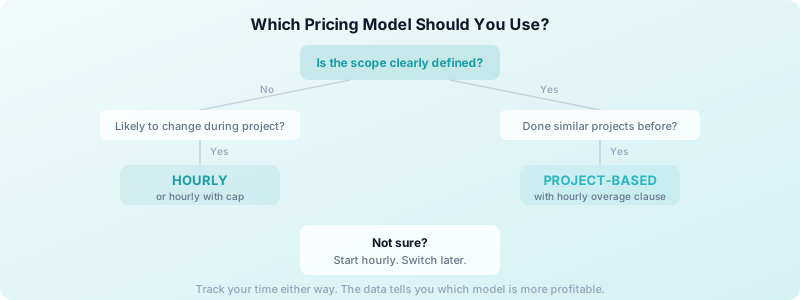
Use hourly pricing when:
- The scope is unclear or likely to change
- It's a new type of project you haven't done before
- The client tends to request frequent revisions
- You're providing ongoing support or maintenance
- The work is exploratory (research, strategy, consulting)
Use project-based pricing when:
- The scope is clearly defined with specific deliverables
- You've done similar projects before and can estimate accurately
- You work fast due to experience or specialized tools
- The client values predictable costs
- The project has a clear end point
Hybrid approaches that work
Many experienced freelancers don't choose one model exclusively. They use hybrid approaches that combine the strengths of both.
Hourly with a cap. Quote an hourly rate with a maximum budget. The client gets transparency and predictability. You get paid for your actual time up to the cap. If the project finishes under budget, the client saves money.
Project-based with hourly overage. Quote a flat fee for the defined scope, with an hourly rate for anything beyond scope. This protects you from scope creep while giving the client a predictable base price.
Retainer model. The client pays a fixed monthly fee for a set number of hours. You get predictable income, and the client gets priority access to your time. Hours beyond the retainer are billed at a premium hourly rate.
Value-based with time floor. Quote based on the value you deliver, but track your time to ensure your effective rate stays above your minimum. If a project's effective rate drops below your floor, you know to reprice next time.
Each hybrid approach solves a specific problem. The key is matching the model to the client and project type.
Why tracking time matters for both models
Here's what many freelancers miss: time tracking isn't just for hourly billing. It's essential for every pricing model.
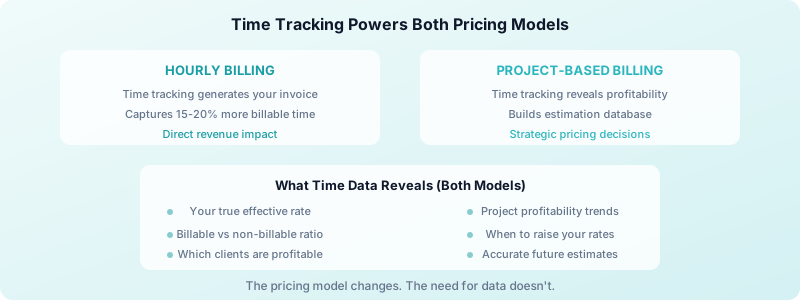
For hourly pricing, the case is obvious — you need accurate time records to invoice correctly. But even here, most freelancers make tracking mistakes that cost them money. Real-time tracking captures 15-20% more billable time than end-of-day logging.
For project-based pricing, time tracking is how you know whether your projects are actually profitable. Without it, you're guessing. That $3,000 website project felt profitable — but did it take 25 hours or 45? The difference is an effective rate of $120/hour versus $67/hour. Only time tracking reveals the answer.
Time data also makes you a better estimator. When you track every project, you build a personal database of how long things actually take. Your next estimate is based on data, not hope. Over time, your fixed-price quotes become more accurate, and your profitability improves.
Finally, tracking helps you calculate your true hourly rate regardless of billing model. Whether you bill hourly or by the project, you need to know what you're effectively earning per hour of work. That number determines whether your freelance business is sustainable.
Choose the model, track the time
The pricing model you choose matters less than most freelancers think. What matters more is knowing your numbers: your true hourly rate, your billable ratio, your project profitability, and your effective income per hour of work.
Both hourly and project-based pricing can be highly profitable — if you track the data to optimize them. The freelancers who earn the most are the ones who measure their time, review their data, and adjust based on what they find.
Download Toggle Time Tracker and start tracking every project — hourly and fixed-price alike. The data will show you exactly which model works best for your business.