When to Raise Your Freelance Rates (And How to Do It)
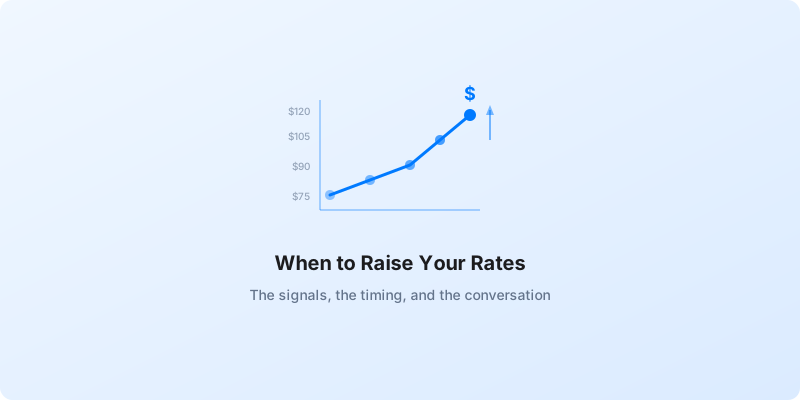
Raising your rates is one of the highest-leverage moves in freelancing. A 15% rate increase applied across all your clients can add thousands to your annual income — without working a single extra hour. Yet most freelancers wait too long, raise too little, and stress too much about the conversation.
Here's how to know when the time is right, how much to raise, and exactly how to tell your clients.
Signs it's time to raise your rates
Not every slow month means you need to lower your rates, and not every busy month means you should raise them. Look for sustained patterns, not one-off signals.
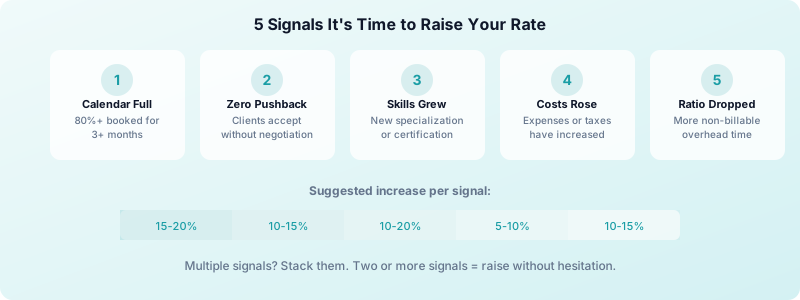
Your calendar is consistently full. If you've been at 80% capacity or higher for three or more months, demand exceeds your supply. That's a pricing signal. You're either leaving money on the table or heading toward burnout — probably both.
Clients accept your rate without negotiation. When no one pushes back on price, you're underpriced. Some negotiation is normal and healthy. Zero pushback means you have room to go higher.
Your skills have meaningfully improved. You've added a new specialization, completed advanced training, or simply gotten faster and better at what you do. More value delivered should mean higher rates charged.
Your expenses have increased. Software prices go up, insurance premiums rise, and taxes change. If your costs increase but your rates don't, your effective income shrinks every year.
Your time data shows a lower billable ratio. If you're tracking your billable vs non-billable hours and your billable ratio has dropped, your effective hourly rate has dropped too. A rate increase compensates for increased overhead.
How much to increase and how often
The sweet spot for most freelancers is a 10-20% increase every 12-18 months. Smaller raises more frequently tend to irritate clients, while large infrequent jumps can cause sticker shock.
For existing clients: 10-15% is generally well-received, especially if you've been delivering strong work. Frame it as a reflection of increased value, not just higher costs.
For new clients: You can test higher rates immediately. If your current rate is $85/hour, quote $100 to the next prospect and see how it lands. New clients have no price anchor, so there's less friction.
Annual review approach: The easiest system is to review your rates every January. Use your time tracking data from the past year to recalculate your true hourly rate, factor in any expense increases, and set your new rate for the year ahead.
Here's a guideline based on market signals:
| Signal | Suggested Increase | |--------|-------------------| | Fully booked 3+ months | 15-20% | | No price pushback | 10-15% | | Skill/certification gained | 10-20% | | Expense increase only | 5-10% | | Annual inflation adjustment | 3-5% |
How to communicate a rate increase to existing clients
The conversation matters as much as the number. Here's what works:
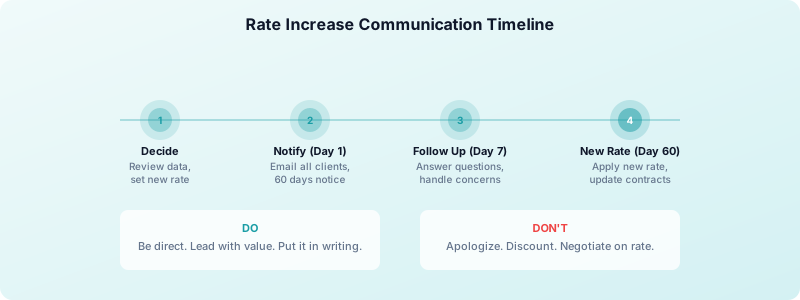
Give advance notice. Tell clients 30-60 days before the new rate takes effect. This shows respect for their budgets and planning cycles.
Be direct and confident. Don't apologize. A rate increase is normal business practice, not a personal favor you're asking for.
Lead with value, not cost. Remind them of the results you've delivered before mentioning the new number.
Put it in writing. Email is better than a phone call for rate changes. It gives the client time to process and respond thoughtfully. It also creates a paper trail.
Here's a template that works:
Hi [Client], I wanted to give you advance notice that my rates will be updating on [date]. My new rate will be [amount]/hour, up from [current amount]. This reflects [brief reason — increased experience, market adjustment, expanded capabilities]. I love working with you and look forward to continuing to deliver great results. Happy to discuss if you have any questions.
Handling pushback gracefully
Some clients will push back. That's normal — and it doesn't mean you should back down.
"We can't afford that." Respond with options: reduce scope, adjust deliverables, or move to a lower-touch service. Don't discount your rate. Discounting trains clients to negotiate every time.
"No one else charges that much." This is rarely true, but even if it is, your value isn't determined by the cheapest competitor. Ask: "Would you like me to help you find someone at a lower rate?" Most clients will quickly confirm they want to keep working with you.
"Can we keep the old rate?" You can offer a short transition period (one more month at the current rate), but set a firm end date. Indefinite grandfather pricing erodes your income over time.
"We'll need to think about it." That's fine. Give them time. Follow up after a week. Most clients who say they need to think will accept the new rate.
The key insight: a client who leaves over a reasonable rate increase was probably undervaluing your work from the start. The clients who stay are the ones worth keeping.
Grandfather vs clean-break pricing strategies
Two main approaches exist for transitioning existing clients to new rates:
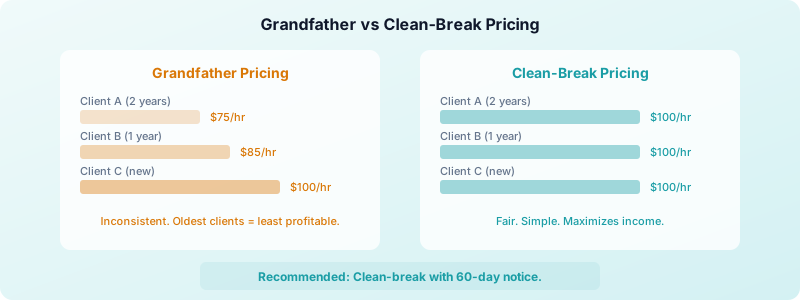
Grandfather pricing: Existing clients keep their current rate (or get a smaller increase) while new clients pay the full new rate. This preserves relationships but creates pricing inconsistency. Over time, your oldest clients become your least profitable.
Clean-break pricing: Everyone moves to the new rate on a set date. Cleaner, fairer, and better for your income — but requires more courage in the conversation.
The recommended approach: Clean-break with a grace period. Announce the new rate with 60 days notice. All clients move to the new rate on the same date. If a long-term client genuinely can't afford the increase, negotiate scope instead of price.
Use your data to make the case
The strongest rate increase is one backed by numbers. When you track your time consistently, you can show clients (and yourself) exactly why a rate change makes sense.
Your time tracking data tells you:
- How many hours you actually bill per week (your real capacity)
- How your billable ratio has changed over time
- Which projects are profitable and which aren't
- Whether your effective rate has kept up with expenses
This data removes emotion from the conversation. You're not raising rates because you feel like it — you're adjusting based on real business metrics.
Download Toggle Time Tracker and start building the data foundation for your next rate increase.