How to Set Client Expectations as a Freelancer
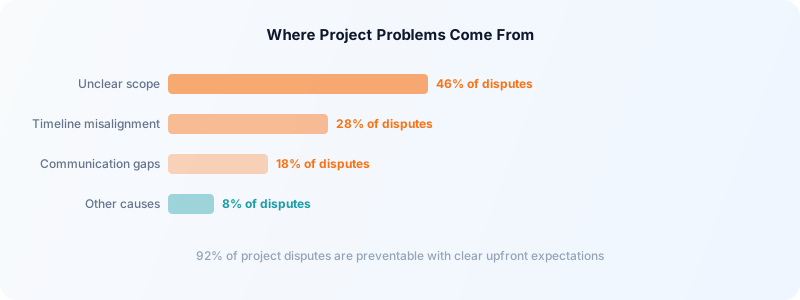
Most project problems trace back to a moment in the first few days when an expectation wasn't set. The client assumed something was included. The freelancer assumed the client understood the process. Both assumptions went unchecked, and the gap grew until it became a conflict.
Setting client expectations isn't about defending yourself or managing difficult people — it's about starting every project with clear, shared understanding of what's going to happen and how. The payoff is projects that run smoothly and clients who become repeat work.
Set Expectations Before the Project Starts
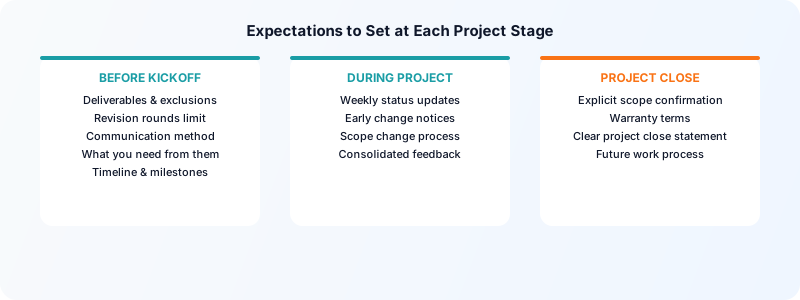
The most effective expectation management is front-loaded. Before signing anything, align on:
1. What you're delivering. Use a specific list of deliverables, not a category description. "Three landing page designs" is better than "landing pages." For a full template, see freelance scope of work template.
2. What you're not delivering. Explicitly stating what's out of scope prevents "I thought that was included" conversations.
3. How revisions work. State the number of revision rounds and what constitutes a round before work begins.
4. How long it takes. Give a realistic timeline, not an optimistic one. Clients prefer accurate over fast.
5. How you communicate. Tell clients when you check messages and how quickly they can expect responses. "I respond to messages within 24 hours on business days" sets a better expectation than leaving it undefined.
6. What you need from them. Clients who understand their role in the project deliver assets and approvals faster. Make explicit: what you need, when you need it, and what happens if it's delayed.
The Communication Policy Conversation
One of the most valuable expectations to set early is your communication policy — when you're reachable, how quickly you respond, and what constitutes an urgent situation.
Without this, clients develop their own expectations, which are often formed by their experience with full-time employees who respond within minutes. Managing this expectation proactively prevents the "why haven't you answered my message?" dynamic.
A simple framing:
"I check and respond to messages twice a day — typically mid-morning and mid-afternoon. For anything urgent, [method] is the best way to reach me quickly. Most messages are handled within the same business day."
This isn't about being less accessible — it's about giving the client an accurate mental model so their experience matches their expectations.
For templates that communicate this and other policies effectively, see freelance client communication templates.
During the Project: Expectation Maintenance
Expectations set at the start of a project decay if they're not reinforced. Clients forget what was agreed. New stakeholders join who weren't part of the kickoff. Scope boundaries erode through informal add-ons.
Regular status updates are the simplest maintenance tool. A brief weekly email covering what's done, what's next, and any open items from the client side keeps expectations aligned without requiring a formal check-in meeting.
When something changes — when you hit a delay, need more information, or encounter an unexpected complexity — communicate it immediately. Early communication about changes preserves the relationship. Late communication about the same change damages it.
Example:
"Quick heads up — I've run into [issue] on the [element] part of the project. This will add [X days] to the delivery timeline. I wanted to let you know as soon as I identified it rather than wait until the original deadline."
Clients can work with adjusted timelines. They can't work with surprises.
When Expectations Get Challenged
At some point in most projects, a client will push back on an expectation you've set. Common scenarios:
"Can we just add this one small thing?" This is a scope boundary challenge. Respond with the change order process, not a yes or a hard no. Acknowledging the request while routing it through the right process keeps both the relationship and the boundary intact.
"I need this tomorrow." If the request was added informally, they may genuinely not understand the timeline impact. Explain it plainly: "That timeline requires [X hours of work] that isn't currently scheduled. I can prioritize it if we shift [deliverable] to [later date], or I can add it on a rush basis for [additional fee]."
"Other freelancers don't charge for this." This is an attempt to use comparison to override your policy. A neutral response: "I understand everyone structures their work differently. My pricing includes [what it includes], and scope changes are billed separately so the base price stays predictable."
In each case, the goal isn't to win an argument — it's to hold the established expectation clearly while offering a reasonable path forward.
Closing the Project Cleanly
How a project ends shapes whether clients come back. At project close:
- Confirm all deliverables are received and accepted
- Summarize what was completed
- Clarify any remaining warranty terms
- Explicitly close the scope: "With this delivery, the original project scope is complete."
That last phrase matters. Without it, clients may continue sending feedback or small requests assuming the project is still open. A clear close signals that the engagement is complete, which makes the next engagement a fresh start — and often leads to it.
The Long-Term Payoff
Freelancers who consistently set and maintain clear expectations develop a reputation that reduces friction over time. Clients who've worked with them come back knowing what to expect, which means shorter intake processes, fewer misunderstandings, and better projects.
For building out the full client management system around these principles, see how to manage multiple freelance clients and freelance client intake questionnaire.
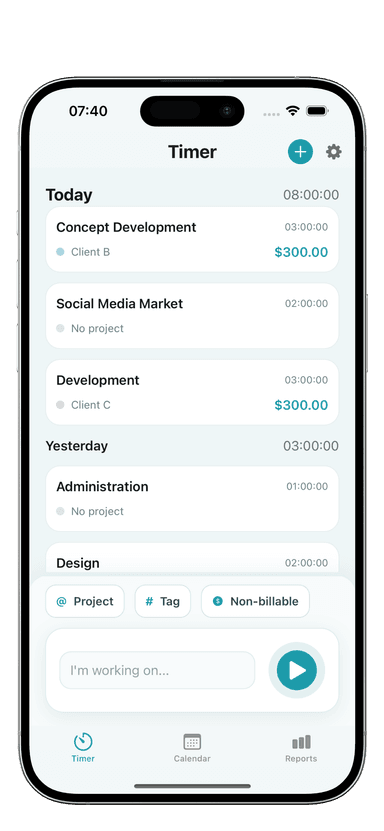
Track your time on each client communication type in Toggle Time Tracker. Seeing how much time good expectation-setting actually saves — versus the hours spent on dispute management and revision overruns — makes the investment in clarity easy to justify.
Download Toggle Time Tracker to see the full picture of time spent on client management, communication, and project delivery.