Freelance Welcome Packet: What to Include
A welcome packet is a document you send to every new client at the start of a working relationship. It packages all the information a client needs to work with you effectively — your process, communication norms, what you need from them, and what they can expect from you — into a single, well-organized document.
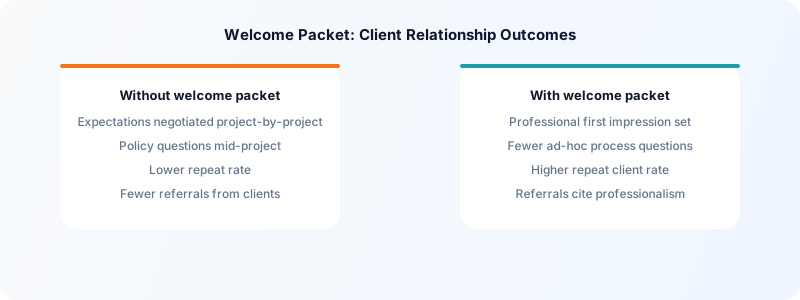
Most freelancers don't have one. The ones who do typically see fewer misunderstandings, smoother project kickoffs, and clients who refer them more often.
Why a Welcome Packet Is Worth Creating
Before a first project starts, both sides are working from incomplete mental models. The client knows what they want to build but doesn't know how you work. You know your process but don't yet know the client's habits and constraints.
The welcome packet fills that gap from your side. It communicates your professionalism, defines the working relationship upfront, and answers the questions clients would otherwise ask piecemeal over the first week of a project.
It also sets a tone. A client who receives a polished, organized welcome packet before work begins forms a different first impression than one who gets a terse email with a contract attached.
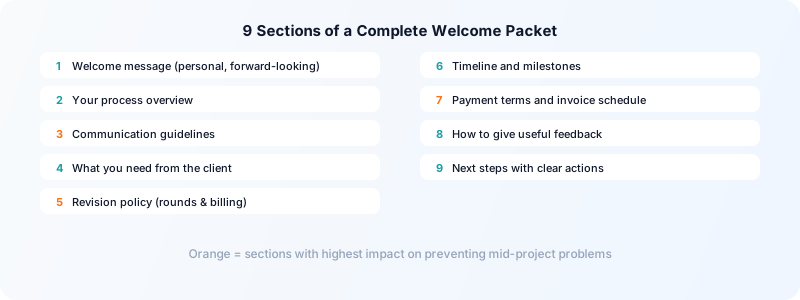
What to Include in a Freelance Welcome Packet
1. Welcome Message
A brief, personal introduction. Not a biography — a forward-looking acknowledgment of the project and why you're looking forward to working together.
Two or three sentences is sufficient. This is the part clients actually read first, so it should be warm and specific to them, not generic.
2. About Your Process
A brief overview of how your projects typically run: the phases, what happens at each stage, and how you collaborate with clients.
This doesn't need to be a full project plan — that lives in your scope of work. This is the high-level rhythm: "Here's how I typically work on projects like this."
For clients who've had bad experiences with freelancers, a clear process description is often genuinely reassuring.
3. Communication Guidelines
This is one of the highest-value sections of any welcome packet.
Include:
- How you prefer to communicate (email vs. project management tools vs. Slack)
- Your response time expectations ("I typically respond within one business day")
- Your working hours and timezone
- How to reach you for genuinely urgent matters
- What constitutes an urgent matter vs. a regular message
Setting these expectations once, clearly, in a document the client signed off on, prevents nearly all communication friction. For a full communication system, see how to set client expectations as a freelancer.
4. What You Need from the Client
List the assets, information, and access you'll need at the start of the project and when:
- Brand assets (logo, style guide, fonts)
- Access credentials (CMS, hosting, analytics)
- Copy or content (if client-provided)
- Stakeholder contacts for approvals
- Any relevant existing work or reference materials
Including deadlines here is especially useful: "I'll need all brand assets by [date] to begin design work on schedule."
5. Feedback and Revision Policy
State clearly:
- How many revision rounds are included
- What a "revision round" means (consolidated feedback, addressed once)
- How additional rounds are billed
- How to submit feedback (email, comments document, meeting)
Clients who understand your revision policy before they start working with you almost never fight it mid-project. Clients who encounter it for the first time when they're on round three often do.
6. Project Timeline and Milestones
Include the agreed timeline with milestone dates. Even if this duplicates what's in the scope of work, having it in the welcome packet means the client has it in one reference document.
Track your time against each milestone in Toggle Time Tracker. The data from this and previous projects is what makes future estimates reliable — not guessing.
7. Payment Terms and Invoice Schedule
Remind clients of:
- Project total
- Deposit amount and due date (if applicable)
- When subsequent invoices will be sent
- Payment methods you accept
- Late payment terms
Clients who don't have clear payment expectations are more likely to be late payers — not necessarily from bad faith, but from simply not having it on their radar. A welcome packet that includes the payment schedule puts it there.
For building strong payment terms, see how to write freelance invoice payment terms.
8. How to Give Feedback
This is a small section with outsized impact.
Explain what good feedback looks like in practice: specific, consolidated, tied to the project goals. You can include a brief example:
Vague feedback: "This doesn't feel right." Useful feedback: "The color palette feels too bright for our brand — can we try a more muted version closer to our current logo?"
Clients who understand how to give useful feedback do so. Clients who've never had this explained often default to vague impressions that require clarification rounds to work with.
9. Next Steps
End the packet with a clear set of next actions:
- What you need from them and by when
- When they can expect your first deliverable or update
- Any documents requiring signature or approval
This closes the document with momentum rather than a generic "thanks."
Format and Delivery
Welcome packets work in almost any format: a Google Doc, a PDF, a Notion page, or a simple well-formatted email. The format matters less than the content and consistency.
Deliver it alongside — or just before — the signed contract. "Here's the contract for signature and your welcome packet, which covers everything we've discussed about how the project will run."
Once you've built the template, customization per client takes 10–15 minutes. You'll update the client name, specific project details, and relevant timeline — the rest stays consistent.
The Long-Term Effect
The welcome packet isn't just about the first project. It's a tool for building a client base that trusts your process. Clients who've experienced it once often refer other clients with a specific mention of how organized you are.
That reputation for professionalism compounds. It attracts better clients, justifies higher rates, and builds working relationships that are genuinely easier to maintain.
For the full client onboarding system, see freelance client intake questionnaire and freelance client communication templates.
Download Toggle Time Tracker to track your full project picture from onboarding through delivery — and see exactly where your time is going on every client relationship.