Freelance Payment Terms: Net 30 Explained
You finished the project, sent the invoice, and now you wait. And wait. If you've ever wondered why your freelance cash flow feels unpredictable, your payment terms might be the problem.
Freelance payment terms net 30 means your client has 30 calendar days from the invoice date to pay you. It's the most common payment term in business, but for freelancers, it can create real cash flow gaps. Understanding how these terms work — and when to use alternatives — puts you in control of when you get paid.
What Freelance Payment Terms Net 30 Actually Mean
Net 30 breaks down simply: "net" refers to the total amount owed, and "30" is the number of days your client has to pay. The clock starts on the invoice date, not when the client opens it.
Here's the catch. Telling a client "pay me within 30 days" often means they pay on day 30 at the earliest. Add weekends, internal approval processes, and payment processing time, and you might not see the money for 35 to 45 days.
For freelancers with one or two active clients, that delay hits harder than it does for agencies juggling dozens of accounts. You still need to cover rent, software subscriptions, and taxes while you wait.
Net 30 vs Net 15: Which Payment Terms Should You Use?
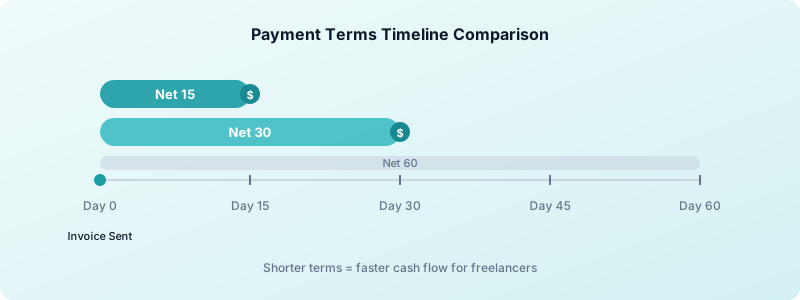
Net 30 is the industry default, but it's not always the best choice. Net 15 cuts your wait time in half and gives you more predictable income. Here's how to decide.
Use Net 15 when:
- You're working with small businesses or solo founders
- Your monthly expenses depend on invoice payments
- The project is under $2,000
- You're onboarding a new client you haven't worked with before
Use Net 30 when:
- Your client is a larger company with a structured accounts payable process
- You have enough savings to cover a 30-day gap
- The project value is high and the relationship is established
- The client has a track record of paying on time
Some freelancers start new clients on Net 15 and extend to Net 30 after three successful on-time payments. This builds trust while protecting your cash flow early on.
How to Structure Payment Terms That Protect You
Smart payment terms go beyond picking a number. You need a system that reduces risk and keeps money flowing in. Here are four strategies that work.
Require deposits. Ask for 30% to 50% upfront before starting any work. Most clients expect this. A deposit confirms the client is committed and gives you working capital from day one.
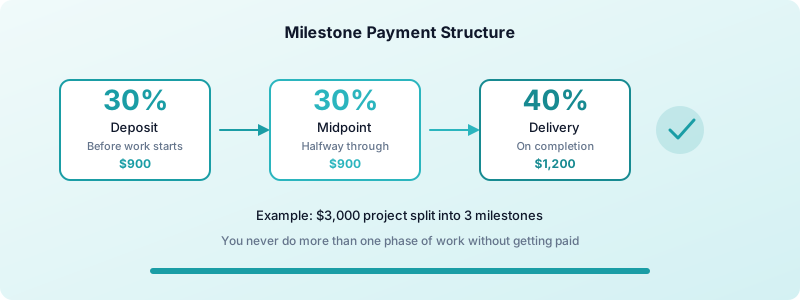
Use milestone payments for bigger projects. Instead of one invoice at the end, split the project into phases. A common structure is 30% upfront, 30% at the midpoint, and 40% on delivery. You never do more than one phase of work without getting paid.
Add late payment fees. Include a late fee clause in your contract — a flat $50 fee or 1.5% monthly interest after the due date. Even if you rarely enforce it, having it in writing motivates on-time payments. Learn more about getting clients to pay on time with a complete follow-up system.
Include the exact due date. Don't just write "Net 30" on your invoice. Add the specific calendar date: "Payment due by April 14, 2026." Invoices with explicit due dates get paid faster because there's no ambiguity.
Early Payment Discounts That Speed Up Cash Flow
One proven tactic to get paid faster is offering a small discount for early payment. The most common format is "2/10 Net 30," which means the client gets a 2% discount if they pay within 10 days. Otherwise, the full amount is due in 30 days.
For a $3,000 invoice, that's a $60 savings for the client and you get paid 20 days sooner. Run the numbers for your situation. If faster cash flow is worth more than the discount amount, it's a solid trade.
You can adjust the terms to fit your needs. Some freelancers offer 5% off for payment within 3 days or 10% off for full upfront payment on smaller projects. The key is making the discount meaningful enough that clients actually take it.
What to Include in Your Freelance Payment Terms
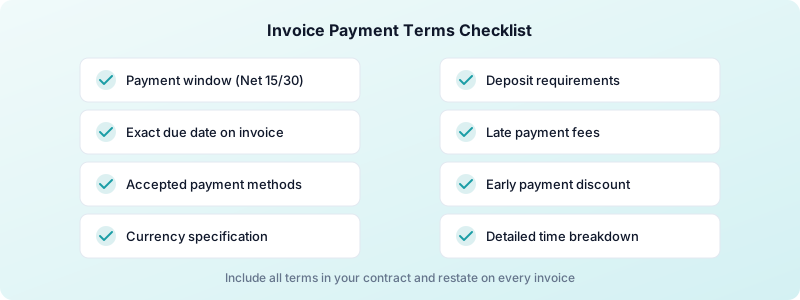
Your invoicing process should spell out every detail so there's zero confusion. Here's what your payment terms section needs:
- Payment window (Net 15, Net 30, or Due on Receipt)
- Exact due date on every invoice
- Accepted payment methods (bank transfer, PayPal, credit card)
- Currency if you work with international clients
- Deposit requirements and when they're due
- Late payment fees and when they kick in
- Early payment discount if you offer one
Put these terms in your contract before work starts, restate them on every invoice, and discuss them during your discovery call. The earlier you set expectations, the fewer payment problems you'll have.
Tracking your billable hours accurately makes your invoices more defensible. When a client sees a detailed breakdown of hours and tasks, they're less likely to dispute or delay payment.
When to Walk Away from Bad Payment Terms
Not every client's terms are worth accepting. Net 60 and Net 90 terms are common with large corporations, but they can drain a freelancer's finances. Before agreeing to extended terms, ask yourself:
- Can I cover two to three months of expenses while waiting for payment?
- Is this client's project large enough to justify the wait?
- Can I negotiate a deposit to offset the long payment window?
If the answer to all three is no, it's okay to decline or negotiate. Many companies will agree to shorter terms if you ask. Others will accept a deposit structure that gives you partial payment upfront.
Knowing your true hourly rate helps you evaluate whether a client's payment terms are sustainable. If waiting 60 days to get paid means you can't take other work, the effective value of that project drops significantly.
Track Your Payment Cycle to Improve It
The best way to optimize your payment terms is to track what's actually happening. Toggle Time Tracker helps you log hours by project, so when it's time to invoice, you have precise data backing up every line item. Clients pay faster when the invoice is clear and detailed.
Start tracking your average days-to-payment for each client. You might find that some clients consistently pay in 10 days while others stretch to 40. Use that data to adjust your terms — offer better terms to reliable payers and tighten terms for slow ones.
Download Toggle Time Tracker and pair accurate time tracking with clear payment terms to take control of your freelance cash flow.