How to Handle Freelance Revision Requests Professionally
Revision requests are a normal part of freelance work. How you handle them determines whether projects finish on budget, on time, and with the client relationship intact — or spiral into unpaid overwork and resentment.
The problems typically aren't the revisions themselves. They're vague feedback that leads to wrong-direction work, revision requests that exceed what was agreed, and freelancers who absorb extra rounds without charging because they're uncomfortable having the conversation. All three are fixable with clear systems.
Start with a Revision Policy Before the Project Begins
The best time to set revision expectations is before any work starts. Your scope of work or contract should specify:
- How many revision rounds are included
- What "one round" means (one set of consolidated feedback, addressed once)
- What happens if additional rounds are requested (billed at your hourly rate)
If you're already mid-project without these terms in place, you can still add them going forward. When delivering the next draft, include a note: "This delivery includes 1 revision round. Additional rounds beyond this are billed at [rate]/hour."
Clients very rarely push back on this. Most assume it was always the policy. For building this into your initial documents, see the freelance scope of work template.
How to Respond to Vague Feedback
The most common revision problem is not the volume of requests — it's the quality. "Make it feel more dynamic," "it needs more energy," "something feels off" are useless instructions without clarification.
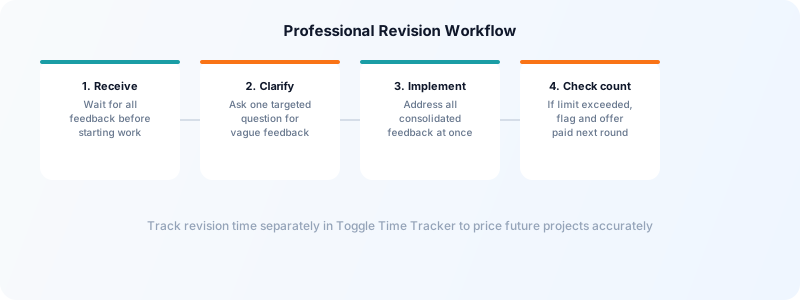
The professional response is a single clarifying question. Not five questions, not a defensive explanation — one targeted question that gets you what you need.
Client: "Can you make the homepage feel more modern?"
You: "Happy to update the direction. A couple of options: we could try a darker background with higher contrast, or a more minimal layout with more whitespace. Which of those feels closer to what you have in mind? If you have any reference sites, those always help me get there faster."
This approach accomplishes three things: it shows you're listening, it gives the client a concrete choice rather than open-ended guessing, and it moves toward resolution in one round rather than two or three.
If the feedback is genuinely unclear, it's always better to ask than to deliver another wrong revision. A 10-minute clarification call saves 2 hours of misdirected work.
Consolidate Feedback Before Starting
Many revision overruns happen not because clients ask for too much, but because freelancers act on feedback before all the feedback arrives.
A client sends four emails over two days, each with different comments on the same deliverable. The freelancer implements the first email, then the second, then discovers the third contradicts the first revision they made. That's three passes of work when one would have been enough.
The fix: hold revisions until all feedback is consolidated.
"Thanks for this feedback. I'll wait until [date] to incorporate everything so we can address it all in one pass. If you have additional comments, please send them by then."
This is not stonewalling — it's efficient for both parties. Most clients appreciate not having to re-review each incremental change.
When Revision Requests Exceed the Agreement
Even with clear revision policies, some clients keep sending feedback round after round. How you handle this conversation matters enormously.
Don't absorb extra rounds silently — that breeds resentment and trains the client that your policies are optional. Don't refuse bluntly — that damages the relationship. The right approach is to flag it professionally and offer a path forward.
Script for exceeding revision rounds:
"I want to make sure we land on something you're really happy with. We've completed the [2] revision rounds included in our agreement. I'm glad to continue working on this — further revisions would be billed at my standard rate of [X]/hour. Want me to go ahead, or would you like to schedule a quick call to align on the final direction first?"
This gives the client agency while making clear that your time has value. Most clients either commit to a final set of changes or agree to the additional billing. The outcome is better than the alternative — hours of unpaid work with growing frustration on both sides.
Track Time on Revisions Separately
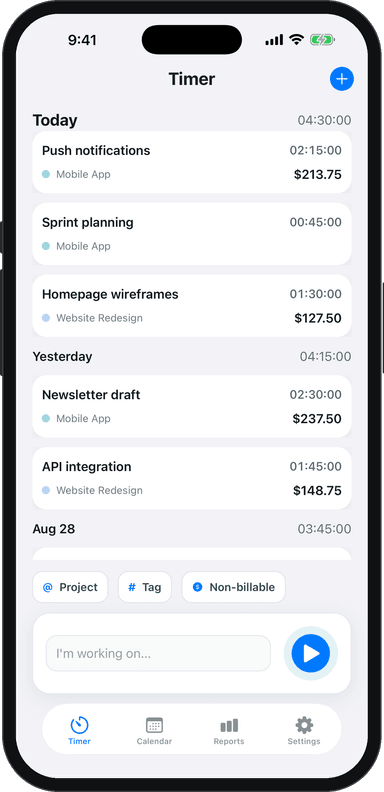
One of the most useful practices for managing revisions long-term: log revision hours separately in Toggle Time Tracker rather than lumping them into general project time.
After several projects, you'll see whether certain types of projects or certain clients consistently generate more revision work than estimated. This data directly informs future pricing — if design revisions average 30% of your project hours, that's overhead you should be pricing in from the start.
It also shows you which clients are worth retaining. A client who requires 4 revision rounds on every deliverable at a fixed price is costing you more than their invoices reflect.
Handling Revision Requests After Project Close
Clients sometimes request changes weeks or months after a project is marked complete. How you respond depends on whether the change is a correction (something that was wrong or didn't meet the stated spec) or a new request (something they want now that wasn't discussed before).
Corrections within a reasonable warranty period (2–4 weeks after delivery) are typically included as goodwill. New requests are billed as new work.
Make this distinction explicit from the start: "My delivery includes a [14]-day warranty for any issues related to the delivered scope. After that period, any changes are billed as new work."
When clients push back on this, a neutral reframe works well:
"The original scope we agreed on is complete and delivered. What you're describing is a change to the scope, which I'm happy to handle as a new project — I can put together a quick estimate if you'd like."
The Underlying Principle
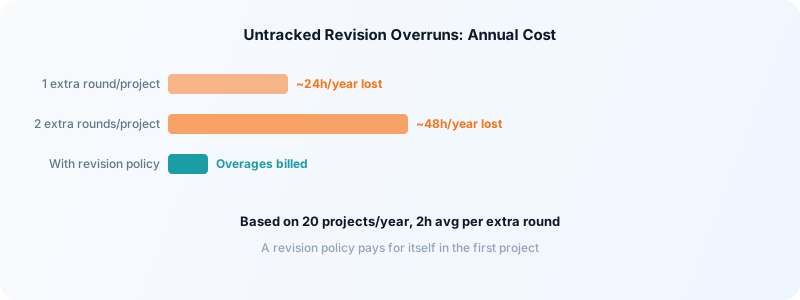
Revision management is really expectation management. Clients who have clear policies, get consolidated feedback, and hear professional responses to scope questions almost never become difficult revision clients. The problems compound when freelancers are vague about policies, respond to every revision request without friction, and then suddenly push back when they're overwhelmed.
Set the policy early, hold it consistently, and handle overages calmly. For a full system covering client relationships from intake to close, see how to manage multiple freelance clients and how to vet freelance clients before accepting work.
Download Toggle Time Tracker to track revision hours separately and see exactly what revisions are costing you across your projects.