How to Vet Freelance Clients Before Accepting Work
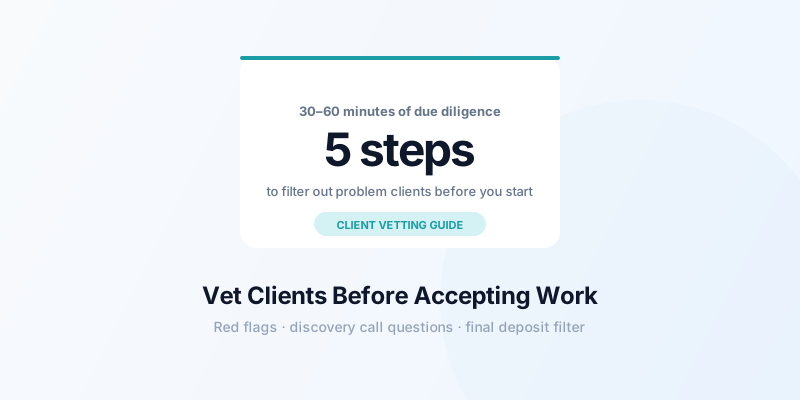
Learning how to vet freelance clients before accepting work is one of the highest-leverage skills in freelancing. A bad client costs far more than a lost project — they drain your time, damage your portfolio if work goes wrong, and can take months to extract yourself from. A well-chosen client, by contrast, pays reliably, respects your expertise, and refers you to others.
Here's a practical vetting system that takes 30-60 minutes per prospect and filters out most problem clients before they become your problem.
Why Client Vetting Matters
Every hour you spend on a bad-fit client is an hour you can't spend on a good one. The opportunity cost is real.
Common costs of a bad client:
- Late or non-payment: Even one unpaid invoice at $2,000-$4,000 wipes out weeks of margin
- Scope creep: Projects that expand endlessly without additional compensation
- Communication drain: Clients who contact you at all hours, change direction constantly, or require constant hand-holding
- Portfolio damage: Work you're embarrassed by or legally can't show
The goal of vetting isn't to screen out anyone who isn't perfect — it's to identify deal-breakers before you commit your time.
Step 1: Research the Prospect Before the Call
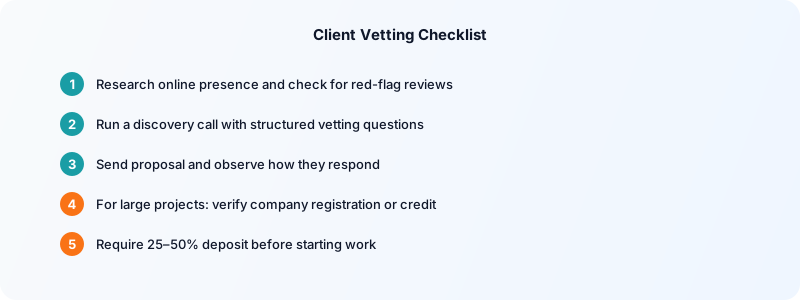
Before you spend time on a discovery call, spend 10-15 minutes researching:
Check their online presence:
- Do they have a functional website, LinkedIn, or credible social presence?
- Does their company appear to be active and real?
- Are there Google reviews, Clutch ratings, or Glassdoor listings that mention how they treat vendors?
Search for red flags:
- "[Company name] + scam" or "[Company name] + doesn't pay"
- Their name on freelancing community blacklists (Freelance Subreddit, Designer Hangout, etc.)
- Any news about financial trouble, layoffs, or legal issues
This takes 10 minutes and eliminates obvious risks. A client with no web presence asking for $10,000 of work is a much higher risk than one with a visible, established business.
Step 2: Run a Discovery Call
The discovery call is your primary vetting tool. You're not just presenting yourself — you're interviewing the client.
Questions to ask:
-
"Have you worked with freelancers before? How did those engagements go?" (If every past relationship ended badly, that's information.)
-
"What's your timeline and what's driving it?" (Impossible deadlines indicate poor planning that will become your problem.)
-
"Who will I be working with day-to-day, and who makes final decisions?" (Unclear decision chains lead to endless revision loops.)
-
"What does success look like for this project?" (Vague answers mean no clear success criteria — a recipe for scope disputes.)
-
"What's your budget range for this project?" (Clients who refuse to share any budget range often have misaligned expectations.)
Green flags to listen for:
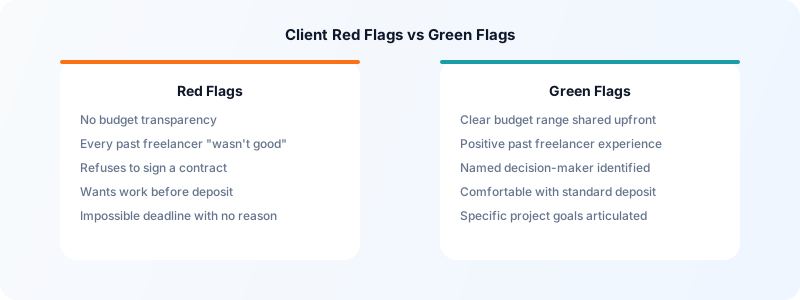
- Clear articulation of the problem they're trying to solve
- Realistic timeline expectations
- Willingness to discuss budget openly
- Previous positive freelancer relationships
- Specific deliverables and decision-makers identified
Step 3: Send a Proposal and Watch How They Respond
How a client responds to your proposal tells you a great deal about how they'll behave throughout the project.
Healthy responses:
- Timely reply (within a business day or two)
- Specific questions about the scope or deliverables
- Counter-proposal that's in the same ballpark as your quote
Red flag responses:
- Immediate aggressive price negotiation (40-50% below your quote with no justification)
- Silence for a week, then a last-minute "we need to start Monday"
- Request to start work before the contract is signed
- "We don't really do formal contracts" from a business-sized client
The proposal stage is also where you learn how respectfully they treat your time. Clients who expect you to revise your proposal three times for free, or who schedule and cancel calls repeatedly, are showing you their management style.
Step 4: Do a Credit Check for Large Projects
For projects above $5,000, it's reasonable to do a basic credit check or look up the company's registration status. This is especially relevant for:
- New companies (less than 2 years old) without an established track record
- Clients based in unfamiliar jurisdictions
- Projects where you'd be taking a significant financial risk upfront
In the US, you can check Dun & Bradstreet for business credit. In the UK, Companies House filings are public. In the EU, national business registries typically have this data. A company that's been operating for 10 years with regular filings is lower risk than one incorporated last month.
Step 5: Require a Deposit as a Final Filter
A 25-50% deposit before starting work is the most effective final filter. It confirms that the client is financially capable and committed enough to pay upfront.
Clients who push back hard on a standard deposit — especially for larger projects — are often clients with cash flow problems, commitment issues, or bad-faith intentions. Genuine clients understand deposits as standard practice.
This connects directly to your vetting process: requiring a deposit sorts clients into those who respect your business terms and those who don't. For more on how to structure deposits, see freelance deposit upfront — how much to charge.
Track Time from Day One
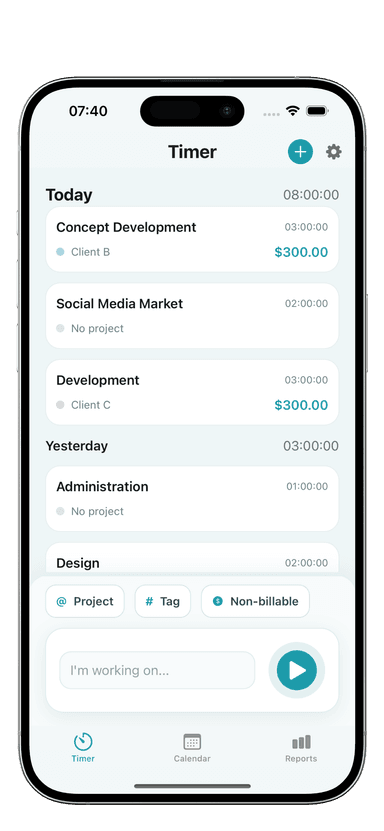
Once you accept a client, track every hour from the first task. Toggle Time Tracker lets you log time by project and client with a single tap. This data:
- Creates a real-time record if disputes arise later
- Shows you early if a project is going over the estimated scope
- Gives you evidence for any scope-creep conversation
Starting time tracking on day one (not "once the project gets going") is the professional standard for client engagements that matter.
The 5-Minute Gut Check
After all the research, calls, and proposal exchanges, trust your read on the person. If something feels off — they seem entitled, they dismiss your expertise, they treat small details dismissively — take that seriously.
Good clients are often obvious: they're clear, responsive, respectful of your time, and enthusiastic about the project. When you find one, treat that relationship like an asset. For everything about building and maintaining strong client relationships, see how to manage multiple freelance clients.
Download Toggle Time Tracker and start logging project time from day one — clear records from the very first task are your best protection on any new client engagement.