Freelance Proposal Close Rate: What's Normal and How to Improve Yours
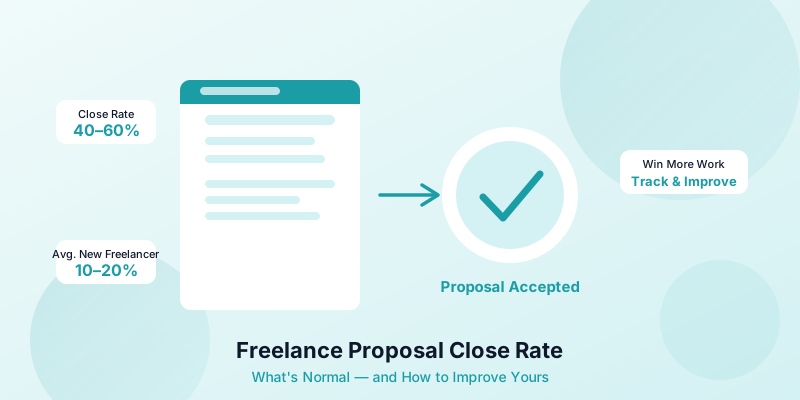
Your close rate is one of the most telling numbers in your freelance business — and most freelancers have no idea what theirs is. If you're sending proposal after proposal and only landing a fraction of them, you might be wondering whether you have a pricing problem, a positioning problem, or just bad luck.
The truth is that close rates vary enormously by experience level, niche, and client type. Understanding where you stand — and why — is the first step to improving.
What is a freelance proposal close rate?
Your proposal close rate (also called your win rate or conversion rate) is the percentage of proposals you send that result in a signed contract and paid work. If you sent 20 proposals last quarter and landed 5 clients, your close rate is 25%.
It sounds simple, but most freelancers track this inconsistently if at all. Without a reliable number, you can't improve it.
What close rates look like at different experience levels
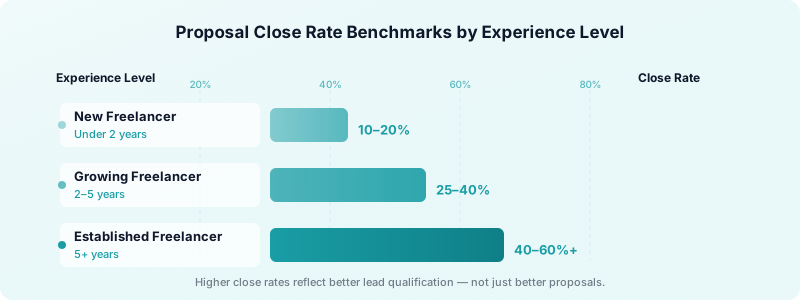
There's no universal benchmark, but here's what tends to be realistic based on where you are in your freelance career:
New freelancers (under 2 years): Close rates in the 10–20% range are common. You're still refining your positioning, learning how to write proposals, and often casting a wide net to find the right client types. A 1-in-5 hit rate isn't failure — it's part of building a client base.
Growing freelancers (2–5 years): With a clearer niche and some client wins under your belt, close rates typically climb to 25–40%. You have case studies, referrals start flowing, and you're better at qualifying leads before spending time on proposals.
Established freelancers (5+ years): Many experienced freelancers see close rates of 40–60% or higher — but often because they're sending far fewer proposals. They've learned to qualify harder, so the proposals they do write go to well-matched prospects.
Why your close rate might be low
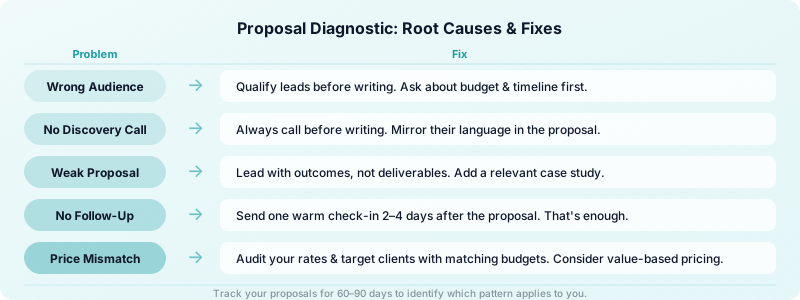
A low close rate rarely has a single cause. Here are the most common culprits:
Targeting the wrong clients. If you're sending proposals to leads who aren't a good fit — wrong budget, wrong industry, wrong project type — no amount of proposal polish will save you. The problem happens before you open the doc.
Skipping the discovery call. Sending a proposal cold, without a conversation first, dramatically reduces your chances. A discovery call lets you understand what the client actually needs, surface their concerns, and position your solution directly. Proposals written after a good discovery call close at a much higher rate.
A weak or generic proposal. If your proposal reads like a template, the client will treat it like one. A strong proposal reflects the specific problem you discussed, speaks to outcomes the client cares about, and makes a clear case for why you're the right choice.
Price mismatch. Sometimes you're simply priced out of a prospect's budget — or priced so low that you signal inexperience. Knowing your rates and being confident in them is foundational. If you're always losing on price, it's worth looking at whether you're targeting clients who can afford professional rates.
No follow-up. Many freelancers send a proposal and wait. Clients are busy. A single, well-timed follow-up — two to four days after sending — can recover deals that went quiet for no reason other than inbox chaos.
How to diagnose your specific problem
Before you change anything, track your proposals for 60–90 days. For each one, note:
- Where the lead came from
- Whether you had a discovery call before writing the proposal
- The proposed budget range
- Whether you followed up
- The outcome (won, lost, ghosted, or declined)
After 15–20 proposals, patterns emerge. If most losses come from a specific lead source, that's a targeting problem. If ghosting is your main issue, it's a follow-up problem. If clients say yes to the project but no to the price, that's a pricing or positioning problem — and it might be worth exploring value-based pricing as an alternative to hourly rates.
Toggle Time Tracker can help here in a less obvious way: by logging the time you spend on each proposal, you can see your actual cost of business development. If a single proposal takes you three hours and you're closing 1 in 10, that's 30 hours of unpaid work per client. Knowing that number motivates you to qualify harder and write tighter proposals.
Tactics that move the needle
Make discovery calls non-negotiable. Before writing any proposal, have a 20–30 minute call. Ask about their goals, timeline, past attempts to solve the problem, and what success looks like. Use what you learn in the proposal itself — mirror their language and prioritize the outcomes they mentioned.
Lead with outcomes, not deliverables. Instead of listing what you'll do (5 blog posts, 10 hours of design), describe what the client will have at the end and why it matters to them. Clients buy results, not tasks.
Add social proof at the right moment. A short testimonial or a relevant case study placed near your pricing section does more work than a full portfolio page. One well-chosen example beats ten generic ones.
Follow up once, warmly. Two to four days after sending, send a short follow-up: "Just checking in to see if you had any questions about the proposal." That's it. No pressure, no lengthy re-pitch. One follow-up can recover a surprising number of deals.
Set a proposal expiry. Including "this proposal is valid for 14 days" creates mild urgency without being pushy. It also gives you a natural reason to follow up after the deadline.
When a low close rate is actually a sign you're doing things right
Here's the counterintuitive part: as your freelance business matures, a falling close rate can be a positive signal.
If you're targeting larger, higher-value projects, you're competing against more experienced freelancers for more discerning clients. A 30% close rate on $10,000 projects is far better than a 60% close rate on $1,500 projects. The same logic applies when you're raising your rates — you'll lose some price-sensitive clients, which is the point.
What you want to track is close rate alongside average project value. If your close rate dips but your revenue per client goes up, your proposal strategy is working.
Putting it all together
A realistic close rate goal depends on where you are and what you're targeting. Rather than chasing an arbitrary percentage, focus on three things:
- Qualify leads before writing. A discovery call filters out bad fits and improves every proposal you do write.
- Make every proposal specific. Generic proposals lose. Proposals that demonstrate you understand the client's problem win.
- Follow up consistently. One follow-up is not pushy. It's professional.
Track your proposals, note your close rate, and revisit it every quarter. It's one of the clearest signals you have about whether your positioning, pricing, and process are working — and Toggle Time Tracker makes it easy to see exactly how much time you're investing in business development so you can make sure it's paying off.