Freelance Project Management Tips to Deliver on Time
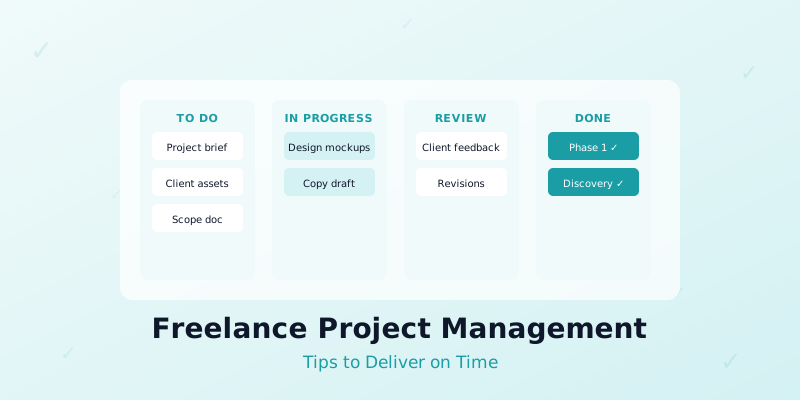
Every freelancer has lived the nightmare: a project that quietly balloons past its deadline and budget while the client grows impatient. The fix is not working harder — it is better freelance project management. When you treat each project as a structured process instead of a loose collection of tasks, you finish on time, protect your income, and build the kind of reputation that gets you referrals.
Break Every Project Into Phases Before You Start
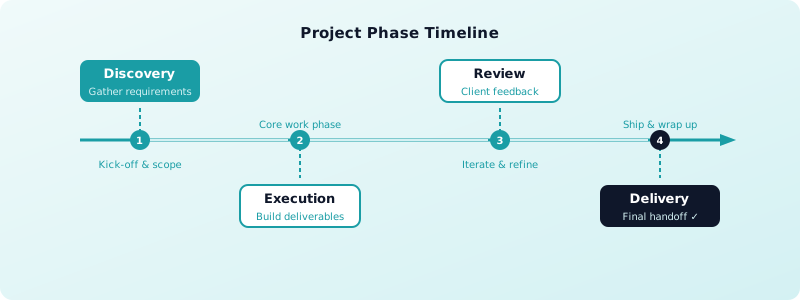
Before you touch a single deliverable, map the project end-to-end. Most freelance projects fit into four natural phases: discovery (gathering requirements), execution (doing the work), review (client feedback rounds), and delivery (final handoff). Write these phases down, even for small projects.
Breaking work into phases does two things. It forces you to spot potential problems — a missing asset, an undefined requirement — before they become delays. It also gives you natural checkpoints to bill against, which keeps cash flow predictable.
Treat phase planning as a non-negotiable part of your kickoff process. If a client pushes back on the time you spend planning, explain that it is exactly what keeps projects from running over.
Set Milestones and Deadlines That Actually Hold
A final deadline alone is not a plan — it is a prayer. Milestones break that one big date into smaller, accountable moments. Assign a concrete deliverable to each milestone so both you and the client know exactly what "done" looks like at every stage.
Build buffer time into your schedule, not just at the end but between phases. Clients take longer to review than expected, files arrive late, and unexpected revisions happen. If your plan has no slack, any hiccup cascades into a missed deadline.
Share your milestone schedule with the client in writing before work begins. This creates a shared reference point that makes it easy to flag when scope starts to drift — and helps you with preventing scope creep on projects before it derails your timeline.
Communicate Proactively to Prevent Surprises
The most common reason freelance projects go off the rails is not a technical problem — it is a communication gap. Clients fill silence with anxiety, and anxiety leads to scope changes, micromanagement, and rushed decisions.
Send a brief status update at least once a week, even if nothing has changed. A two-sentence message like "On track for Friday delivery, reviewing final assets today" costs you thirty seconds and saves hours of anxious back-and-forth.
When something does go wrong — and eventually it will — surface it early. Telling a client on Monday that you need two extra days is far less damaging than telling them on the Friday the work was due. Proactive communication is also the foundation of managing multiple clients at once without dropping the ball on any of them.
Track Your Time to Stay on Budget and Schedule
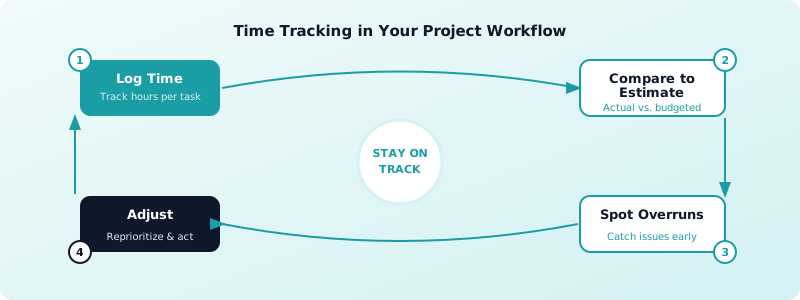
Time tracking is not just a billing tool — it is a project management tool. When you log hours by phase or task, you can see in real time whether you are on pace or quietly running over. That awareness lets you act before a small overrun becomes a serious problem.
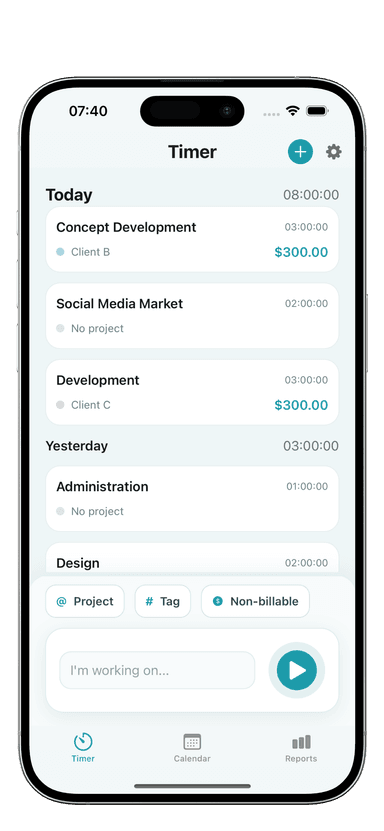
Use an app like Toggle Time Tracker to start and stop timers as you switch between tasks. The friction is near zero, and the data you build up over weeks and months becomes a powerful estimating tool. You will stop guessing how long things take and start knowing.
If you notice you have burned 80 percent of your budgeted hours with only 50 percent of the work done, you have time to renegotiate or reprioritize — not scramble at the end. Time tracking gives you that early warning. Combined with strong habits around managing your time as a freelancer, it is one of the highest-leverage changes you can make.
Build a Project Wrap-Up Routine That Improves Future Work
Most freelancers finish a project and immediately move on to the next one. That is understandable — and it is also how you repeat the same mistakes. A short wrap-up routine turns each project into data that makes you better.
After delivery, spend fifteen minutes answering three questions: What took longer than expected? What would I do differently? What should I build into my next estimate? Write the answers down somewhere you will actually find them.
Review your time logs before you archive the project. Compare your estimates to actuals for each phase. Over time, this habit calibrates your quoting accuracy, reduces stress, and makes your freelance project workflow progressively smoother with every project you complete.
Consistent project delivery is what separates thriving freelancers from those constantly playing catch-up. The tips above give you a repeatable framework — but the details live in your data. Start tracking your time on every project with Toggle Time Tracker and turn guesswork into a system that works.