Freelance Milestone Payments: How They Work and Why You Need Them
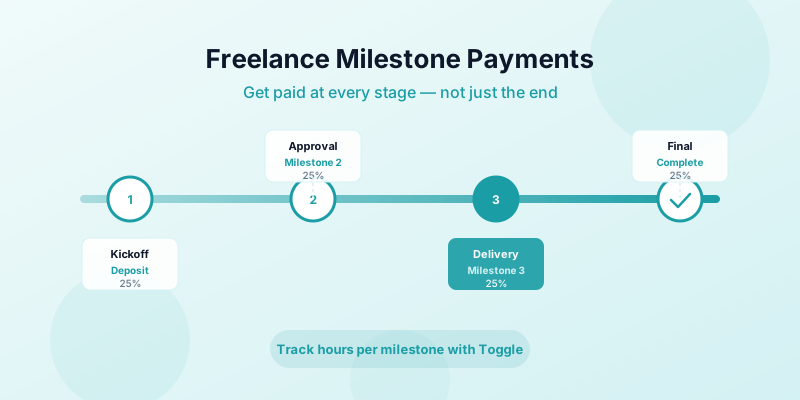
If you have ever finished a large project and then waited 45 days to get paid, you already understand why freelance milestone payments exist. Instead of invoicing everything at the end, milestone-based billing breaks a project into defined stages with a payment tied to each one. It is one of the most practical changes you can make to how you run your freelance business.
This guide explains exactly how freelance milestone payments work, how to structure them for different project types, how to write them into your contract, and what to do when a client misses one.
What Are Freelance Milestone Payments?
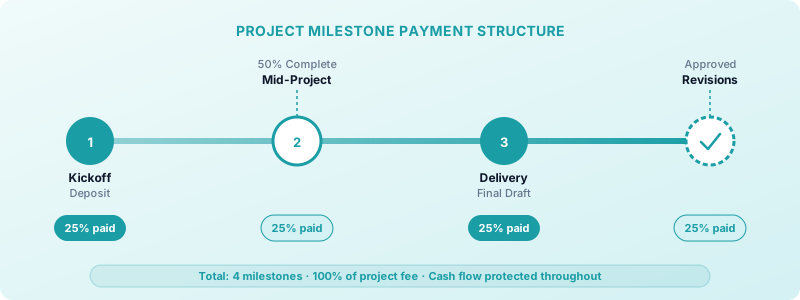
A milestone payment is a partial payment tied to the completion of a specific phase of a project. Rather than submitting one invoice when everything is done, you agree upfront on two to four payment points throughout the project. Each payment is triggered by a deliverable or an event, such as completing a first draft, approving a design direction, or shipping a working prototype.
For example, a $4,000 web project might be split like this:
- Kickoff deposit (25%) — $1,000 paid before work begins
- Mid-project delivery (50%) — $2,000 paid when the first functional version is approved
- Final delivery (25%) — $1,000 paid on project completion
That structure is straightforward to understand, easy to put in a contract, and gives both sides clear expectations from day one.
Why Milestone Invoicing Is Better Than End-of-Project Billing
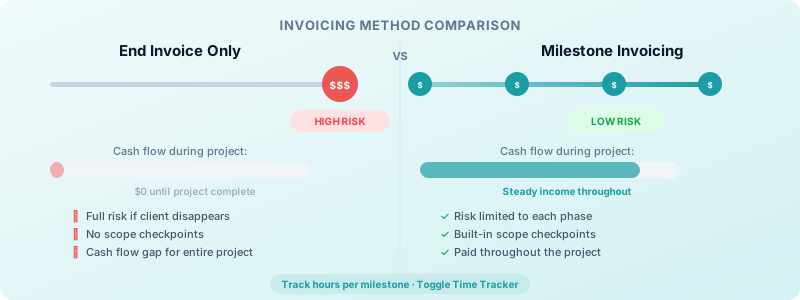
Waiting until a project is complete to invoice is one of the most common cash flow mistakes freelancers make. Here is why milestone billing solves problems that end-of-project invoicing cannot.
Better cash flow. When you invoice in stages, money comes in throughout the project instead of all at once at the end. This means you can cover your own expenses, software costs, and living costs without dipping into savings while a 60-day project runs its course.
Scope protection. Milestones create natural checkpoints where both you and the client review and approve the work. If the scope starts expanding, you catch it mid-project when there is still time to renegotiate, rather than absorbing extra hours after everything is done.
Reduced financial risk. If a client disappears, disputes the work, or goes out of business halfway through a project, you are not left holding the entire cost of your time. You have already been paid for the completed phases.
Client accountability. When clients have money on the line at each stage, they tend to provide feedback faster and stay engaged with the project. Delayed approvals slow down their next payment trigger, which is a built-in motivation to stay responsive.
Easier invoicing. A smaller, clearly scoped invoice for a specific phase is much harder to dispute than one large invoice that covers three months of work across dozens of tasks. Pair your milestones with a tool like Toggle Time Tracker to track hours against each milestone separately, so you always know your actual cost versus what you quoted before you submit the next invoice.
How to Structure Milestones for Common Project Types
The right milestone structure depends on the nature of the project. Here are three common scenarios.
Web design and development projects. These projects have natural phases that map cleanly to milestones.
- Kickoff deposit (25-30%) — before any work begins
- Design approval (25%) — when wireframes or mockups are signed off
- Development complete (25%) — when the site is built and in staging
- Launch (20-25%) — when the site goes live and revisions are complete
Writing and content projects. Content projects move faster, so two or three milestones usually make sense.
- Deposit (50%) — before research or drafting begins
- Final delivery (50%) — when the approved final draft is delivered
For longer engagements like a content series or an e-book, add a middle milestone tied to the first draft approval.
Design and branding projects. Logo and brand identity projects are prone to scope creep through revision rounds, so milestone language is especially important here.
- Deposit (30%) — before concept development
- Concept approval (40%) — when the client selects a direction from initial concepts
- Final files delivery (30%) — when all final brand files are handed over
The key principle across all project types is that each milestone should be tied to something concrete and verifiable — a deliverable, an approval, or a go-live event. Avoid milestones based on calendar dates alone, since project timelines shift.
How to Write Milestone Language into Your Contract
Having a verbal agreement about milestones is not enough. Your contract needs to spell out the terms clearly. Here is the language you need.
Define each milestone explicitly. List every milestone by name, what it includes, what triggers it, and the payment amount. Vague language like "50% at midpoint" causes disputes. Specific language like "Payment of $2,000 is due within 5 business days of client approval of the completed wireframes" does not.
Tie payment to approval, not just delivery. Build in a review window — typically 5 to 7 business days — and state that if the client does not respond within that window, the milestone is considered approved and payment is due. This prevents indefinite delays caused by a client who never formally responds.
State that work pauses on missed payments. Include a clause that work on the next phase will not begin until the current milestone payment is received. This protects you from finishing an entire project while chasing payment for phase two.
Clarify what is included in each milestone. State how many revision rounds are included per phase and what counts as a new scope item versus a revision. This is where you prevent scope creep from eating into your time budget.
For a deeper look at setting up payment terms that protect you from day one, see this guide on how to structure your payment terms, and make sure your first milestone is always a deposit paid before work begins.
How to Handle a Client Who Misses a Milestone Payment
Even with a solid contract, some clients miss payment deadlines. Here is how to handle it without burning the relationship or losing money.
Send a prompt, professional reminder. On the day a milestone payment is due and unpaid, send a short, polite email referencing the invoice number, the amount, and the original due date. Do not wait a week to follow up — the sooner you act, the faster you get paid.
Pause work immediately. If your contract says work pauses on missed payments, follow through. Do not keep delivering work while a payment is outstanding. Continuing signals that the clause is not real, and you will be in a worse position for the next milestone.
Escalate calmly and in writing. If a reminder goes unanswered for more than three business days, follow up again and note that project timelines will shift as a result of the delay. Keep everything in writing so you have a clear record.
Offer a short extension if the client communicates. Sometimes payments are delayed for legitimate reasons. If the client reaches out and explains the situation, offering a short extension — with a revised due date in writing — is usually better than pushing for immediate payment and damaging the relationship.
Know when to stop. If a client misses two consecutive milestone payments and is not communicating, it is time to consider stopping work entirely and consulting the late payment clause in your contract. Knowing how to send a proper invoice and document your work from the start gives you a stronger position if you ever need to escalate.
Tracking Time Against Milestones
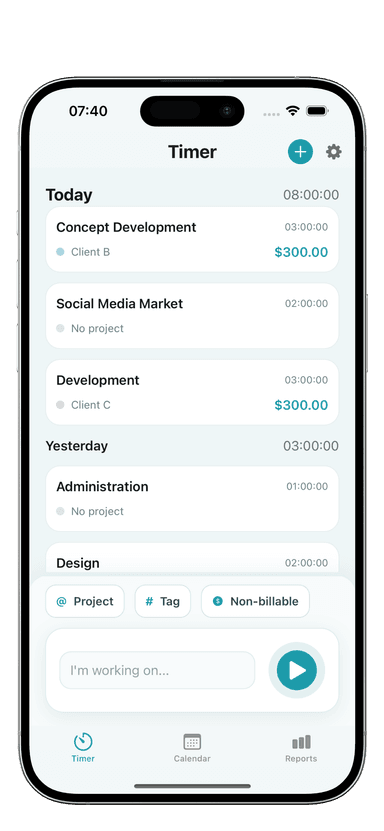
One practical advantage of milestone-based projects is that they give you a natural way to measure whether a project is on budget. Using Toggle Time Tracker, you can create a separate timer entry or project label for each milestone phase. As you work, you can see in real time whether your hours on phase one are tracking toward your estimate — before you start phase two.
If you hit 90% of your budgeted hours with the work only half done, you know immediately that the scope has grown or your estimate was off. That insight lets you have a calm, data-backed conversation with the client before the project is over, rather than silently absorbing overrun hours and resenting the client at the end.
This combination — clear milestone contracts and accurate time tracking — is the foundation of a freelance business that stays profitable project after project.
Start Using Milestone Payments on Your Next Project
Milestone payments are not complicated to set up. Pick two to four logical phases for your project type, tie each one to a concrete deliverable, write the terms into your contract, and make sure your first payment is collected before work begins. The entire structure can be added to most existing contracts in a few lines.
If you want to start tracking your time against each milestone so you know exactly where your hours are going, download Toggle Time Tracker and set up a project for your next engagement before you start the clock.