How to Break the Freelance Feast or Famine Cycle

If you've freelanced for more than six months, you've felt it: three weeks of back-to-back deadlines, then silence. A month where you turn down work, followed by a month where you refresh your inbox every hour hoping for a lead. The freelance feast or famine cycle is one of the most common — and most draining — patterns in self-employment.
According to data from Freelancers Union, around 66% of freelancers find it genuinely difficult to get consistent freelance work. The cycle doesn't just hurt your income; it triggers a pattern of bad decisions. During the feast, you skip marketing because you're swamped. During the famine, you take on projects you'd normally decline, lower your rates, and scramble to fill the gap. Then the feast comes back and the pattern repeats.
The good news: it's a solvable problem. You can't eliminate the variability of freelance work entirely, but you can reduce it enough that the lows stop feeling like emergencies.
What Is the Feast or Famine Cycle (and Why It Happens)
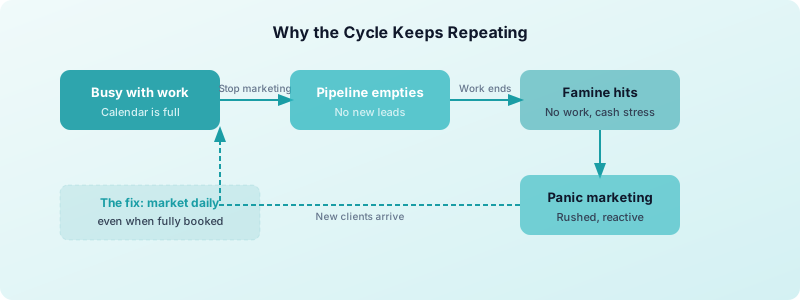
The feast or famine cycle isn't bad luck — it's a structural problem with how most freelancers manage their time. When you're busy with client work, you stop doing the activities that bring in new clients: sending proposals, updating your portfolio, following up with past contacts. Work dries up. You panic and market like crazy. New clients appear. You get busy again and stop marketing. Repeat.
The cycle is self-reinforcing precisely because the activities that stabilize your pipeline — outreach, follow-up, relationship-building — feel optional when your calendar is full. They aren't. They're the most important business activity you do.
Understanding this is the first step. The cycle isn't caused by the market; it's caused by when you choose to invest in your pipeline.
Keep Marketing Even When You're Fully Booked
The single most effective way to break the feast or famine cycle is to market consistently, regardless of how busy you are. That sounds obvious but feels unnatural when your calendar is packed and you can barely finish current projects.
Start small. Block 30 minutes every weekday — on your calendar, non-negotiable — for pipeline activities. That might mean:
- Sending one check-in message to a past client
- Commenting thoughtfully on a post in your niche
- Reaching out to a referral source you've been meaning to contact
- Responding to one relevant community post or forum question
You don't need to run a full marketing campaign during your busiest weeks. You need to maintain a baseline signal. That signal is what turns a 3-week drought into a 3-day slowdown.
The goal isn't finding work right now — it's ensuring you're visible when someone needs what you do in three weeks.
Build a Client Pipeline That Runs on Autopilot
A healthy freelance business has a pipeline with multiple stages, not just "current clients" and "no clients." Think in four categories:
- Active clients — projects you're currently working on
- Warm leads — people who've shown interest or you've recently quoted
- Past clients — people who've paid you before and could again
- Referral sources — professionals who send work your way
Most freelancers focus entirely on category one and wonder why the famine arrives every few months. Maintaining even light contact with categories two, three, and four creates a buffer that smooths out the boom-and-bust pattern.
When managing multiple freelance clients, you'll notice that a few tend to refer others, come back for repeat projects, or expand their scope over time. These are your anchor relationships. Invest in them specifically.
A simple CRM or even a spreadsheet with names, last contact dates, and notes is enough. The habit of reviewing it weekly matters more than the tool you use.
Move Clients to Retainers for Predictable Income
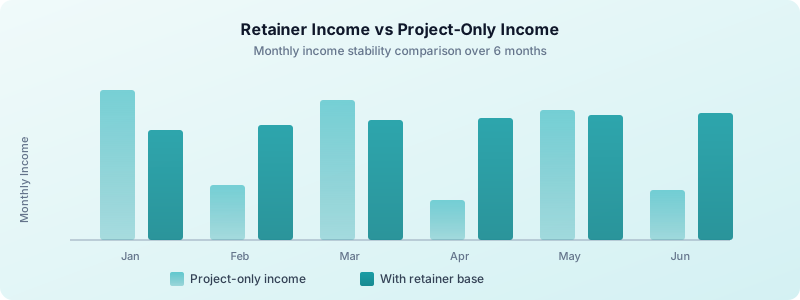
The most structurally reliable fix for income instability is recurring revenue. If a portion of your income arrives every month regardless of whether you're actively pitching, the famine phase loses most of its teeth.
The freelance retainer model works best for clients with an ongoing need: monthly content, regular design revisions, continuous technical support, or periodic strategy work. If a client has hired you for the same type of work two or three times, that's a strong signal they'd benefit from a retainer.
A basic retainer pitch doesn't need to be complicated: "I've noticed you come back to me regularly for [X]. I offer a monthly package that gives you priority access and saves you the hassle of re-briefing me each time. Would that be worth exploring?"
Even one or two clients on monthly retainers — at $1,000–$2,000 each — can cover your baseline expenses. Once your fixed costs are covered, project work becomes upside rather than survival money. That shift changes the decisions you make during the feast: you take on work you actually want instead of work that pays the bills.
Protect Your Cash Flow During the Feast
Feast periods tempt you to spend on new equipment, raise your lifestyle spending, or take a slower pace. Some of that is reasonable — but the most valuable thing you can do with a busy month's income is save a portion of it.
A practical target: set aside 20–25% of every invoice into a separate account earmarked for slow periods. After two to three busy months, that buffer covers one month of baseline expenses. That's enough to change how you behave during the famine: you stop taking bad projects because you need the money, which means you preserve your reputation and your energy for clients who actually value your work. See our freelance emergency fund guide for how to size and structure this buffer properly.
Combine this with clean tracking of your freelance income and expenses so you always know your actual freelance cash flow position. Most freelancers who feel like they're in a famine are actually in a moderate slowdown — they just don't have the numbers to know the difference.
Keep two numbers visible at all times:
- Monthly baseline — your real minimum cost of living and business expenses
- Cash buffer — how many months you can cover without any new work
When you know those numbers, the famine stops feeling existential. It becomes a planning problem rather than a crisis.
Use Time Tracking to Spot the Cycle Early
The feast or famine cycle has leading indicators if you know where to look. Your available hours — time that isn't committed to client work — will tell you a slowdown is coming weeks before your bank account does.
When your schedule is packed to 90% capacity, that's the moment to accelerate outreach, not reduce it. Most freelancers do the opposite: they mistake being busy for being secure.
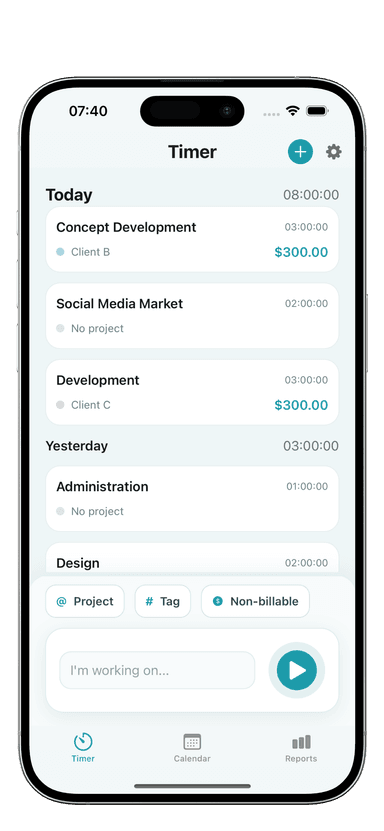
Toggle Time Tracker lets you see exactly how your hours are allocated across clients and projects. When the proportion of billable hours starts trending down over a week or two, that's your early warning signal. You can act on it before you hit zero.
Log your hours by project every day — not to track billable time, but to watch the pattern. An hour of admin time here, an hour of marketing there — over a week, those numbers tell you whether your pipeline is healthy or starting to thin. Use the data to keep your outreach consistent, not reactive.
At the start of each week, check two things: how many billable hours you have confirmed for the coming week, and when your last pipeline activity was. If either number is low, reprioritize before the calendar empties.
Breaking the freelance feast or famine cycle takes a few honest habit changes: market consistently, build recurring revenue, save during busy periods, and track your time so you can see problems before they become crises. None of those steps are complicated — but they require doing the boring, invisible work when you least feel like you need to.
Download Toggle Time Tracker and start tracking how your hours are actually distributed across clients — your pipeline health is visible in the data, if you're looking.