Freelance Emergency Fund: How Much to Save
Building a freelance emergency fund isn't optional — it's the foundation of every financial decision you make as a self-employed professional. Without one, a slow month or an unexpected expense forces you to take bad work, undercharge clients, or go into debt. The hard part is figuring out how much to save when your income changes every month.
Why Freelancers Need More Than 3 Months
The standard advice is to save three to six months of living expenses. That's designed for employees with a stable paycheck. As a freelancer, your risk profile is different.
You can lose income from multiple directions at once: a client pauses a project, invoices go unpaid for 60 days, and a slow quarter arrives at the same time. Employees face one risk — losing their job. You face several simultaneously.
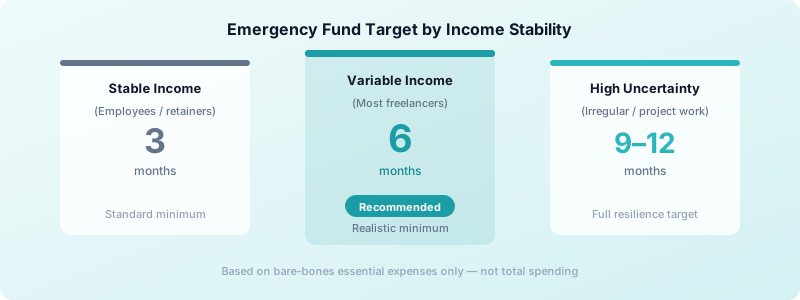
Most financial advisors recommend that freelancers and self-employed workers aim for six to twelve months of essential expenses in their freelance emergency fund. Six months is the realistic minimum. Nine to twelve months gives you enough cushion to handle a prolonged dry spell without making desperate business decisions.
Calculate Your Real Monthly Number
Before you pick a savings target, calculate what you actually need each month — not what you spend, but what you need.
Your bare-bones monthly figure includes:
- Rent or mortgage
- Utilities and internet
- Groceries
- Health insurance premiums
- Minimum debt payments
- Essential business tools (software subscriptions you can't work without)
Exclude dining out, subscriptions you could cancel, and any discretionary spending. If your bare-bones number is $3,500 per month, your six-month target is $21,000 and your twelve-month target is $42,000.
That number might feel overwhelming if you're starting from zero. The goal isn't to hit it immediately — it's to know exactly what you're building toward.
How to Save When Income Is Irregular
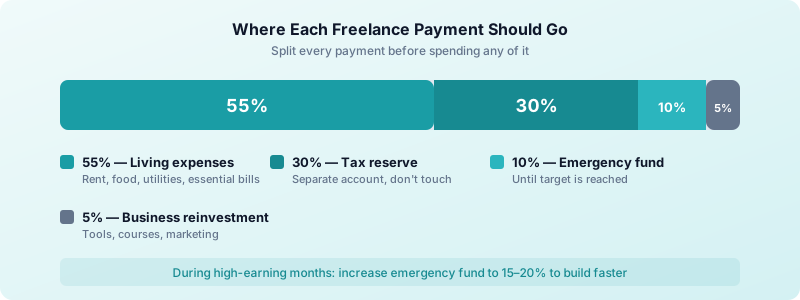
Saving a fixed percentage of every payment is more effective than saving a fixed dollar amount each month. A flat percentage adapts automatically to your income swings — and it answers the question of how much to save without requiring you to predict your income in advance.
A practical breakdown: save 10% of every payment into your emergency fund until you hit your target, then pause and redirect that 10% toward other goals. On top of that, set aside 25–30% for taxes — keeping these in separate accounts prevents you from confusing your emergency savings with your tax reserves.
During high-earning months, increase your emergency fund contribution to 15–20%. This accelerates your timeline and smooths out the inevitable slower months that follow. Toggle Time Tracker's export reports make it easy to review your monthly earnings at a glance, so you always know which months were above average and which were below.
Where to Keep Your Emergency Fund
Your emergency fund needs to be liquid (accessible in one to two business days) and completely separate from your checking account. Separation matters more than most freelancers realize — money sitting in your checking account tends to get spent.
Open a dedicated high-yield savings account for your emergency fund. In 2026, these accounts are paying 4.5–5.0% APY — your savings generates a real return while staying fully accessible.
This isn't an investment account. Don't put your emergency fund in stocks or anything that can lose value. The point is stability and access, not growth.
Keep a second savings account as a short-term freelance income buffer — a smaller reserve of one to two months of expenses that you use to smooth out slow months. Treat that as a separate tool from your true freelance emergency fund, which should only be touched for actual emergencies.
Build It in Stages
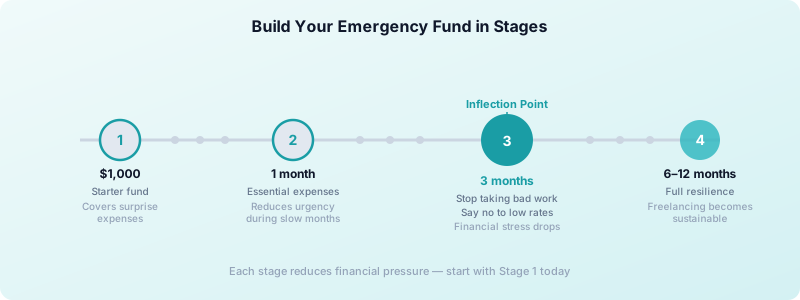
You don't need six months of expenses before you're financially secure. Every month you add to the fund reduces your vulnerability. Build in stages:
- Stage 1: $1,000 starter fund — covers most unexpected one-time expenses (car repair, dental bill)
- Stage 2: One month of essential expenses — reduces urgency pressure during a slow month
- Stage 3: Three months of essential expenses — the point where most financial stress drops significantly
- Stage 4: Six months or more — genuine financial resilience
Most freelancers find that reaching Stage 3 is the inflection point. Once you have three months in reserve, you stop taking bad projects out of desperation. You start saying no to low-paying clients. Your work quality improves because you're not operating from scarcity.
Connect Your Emergency Fund to Your Tax Planning
Your freelance emergency fund and your tax savings are not the same thing, but they work together. Freelancers who track their income carefully know when a big tax bill is coming. Those who don't often raid their emergency fund in April to cover taxes they weren't expecting.
The solution is tracking. When you understand your income patterns — which months are high, which are low, what your average billable rate is — you can set aside the right percentage for taxes every month rather than facing a surprise. Read our freelance quarterly taxes guide to set up a system that keeps your tax savings and emergency fund completely separate.
Your emergency fund should also account for the fact that freelancers don't get unemployment insurance. If you lose a major client, you're on your own. That's exactly why the freelance self-employment tax rate matters — every dollar you save on taxes is a dollar that can go into your emergency fund.
The Real Cost of Not Having a Fund
Freelancers without an emergency fund face a specific trap: they undercharge. When you need money urgently, you accept work at rates you'd otherwise reject. You skip negotiating. You tolerate scope creep because losing the client feels too risky.
A well-funded emergency account changes your negotiating position entirely. When you don't need the next invoice to pay this month's rent, you can afford to walk away from a bad deal.
Review your freelance tax deductions guide as you build your fund — there are legitimate write-offs that reduce your tax bill and free up more cash to save.
Track your hours with Toggle Time Tracker to get a clear picture of your actual earnings each month. Knowing your real hourly output makes it much easier to set accurate savings targets and plan for both taxes and emergencies at the same time.
Start with Stage 1. Open a separate high-yield savings account today, automate a percentage from every payment, and build from there. For self-employed workers without employer benefits or unemployment insurance, a freelance emergency fund isn't a luxury — it's what turns freelancing from stressful into sustainable.