Freelance Quarterly Taxes: How to Pay Without the Panic
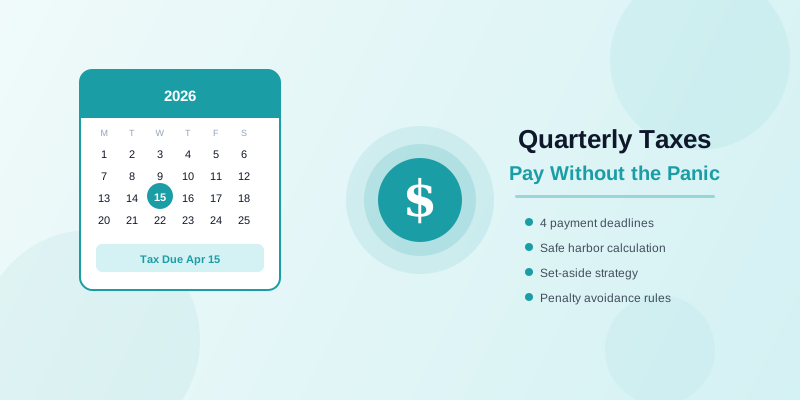
Freelance quarterly taxes catch a lot of independent workers off guard in their first year. You land a few clients, the money starts coming in, and then April arrives with a bill you weren't expecting — plus a penalty on top.
It doesn't have to work that way. Once you understand how the system works, you can plan for every payment, avoid penalties entirely, and stop dreading tax season.
What Are Freelance Quarterly Taxes (And Why You Must Pay Them)
When you work a traditional job, your employer withholds income tax and payroll taxes from every paycheck. As a freelancer, nobody does that for you. The IRS expects you to pay as you earn, which means sending in estimated tax payments four times a year.
You're required to make quarterly estimated tax payments if you expect to owe $1,000 or more in federal tax after subtracting any withholding. Most full-time freelancers clear that threshold in their first quarter.
These payments cover two things: your income tax and your self-employment tax. Self-employment tax is 15.3% of your net earnings — the combined Social Security and Medicare contributions that employers normally split with employees. When you work for yourself, you cover both sides.
How to Calculate Your Estimated Tax Payments
There are two reliable methods for calculating your quarterly payments.
Method 1: Estimate your current-year income. Add up your expected freelance revenue for the year, subtract your business deductions (learn how to maximize your freelance deductions so you're not overpaying), and apply the current tax brackets to find your income tax. Then add self-employment tax — calculated as 15.3% on 92.35% of your net self-employment income. Divide the total by four.
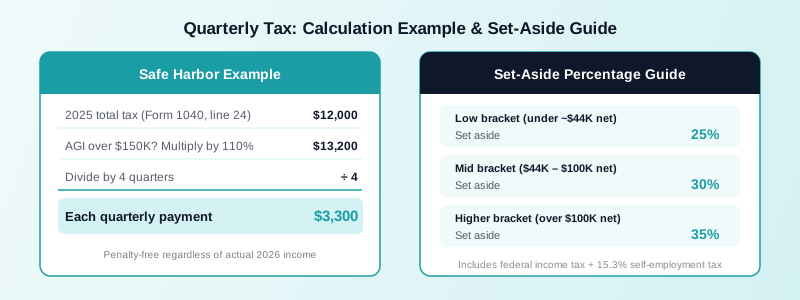
Method 2: Use the prior-year safe harbor. This is the simpler and more popular approach. Find your total tax from last year's Form 1040, line 24. If your 2025 adjusted gross income was $150,000 or less, your quarterly payment is that number divided by four. If your AGI exceeded $150,000, multiply last year's tax by 110% first, then divide by four.
For example: if your 2025 tax bill was $12,000 and your AGI was under $150,000, you pay $3,000 per quarter. Pay that amount by each deadline and the IRS cannot penalize you — even if you end up owing more at filing time.
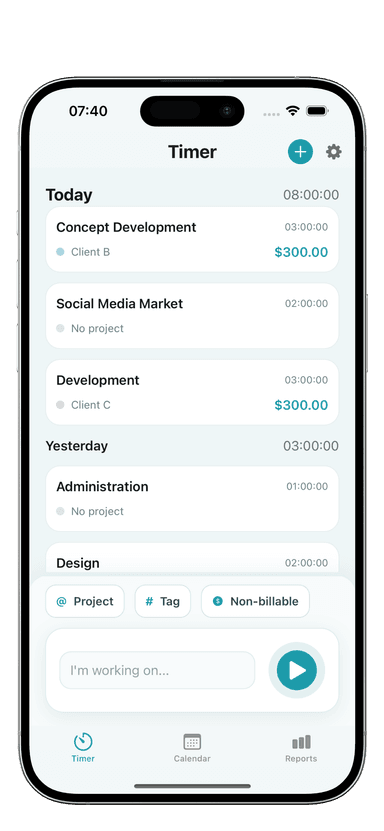
Accurate income records make both methods easier. Using Toggle Time Tracker to log your billable hours means you always know exactly how much you've earned from each client, which feeds directly into your quarterly estimate.
The 2026 Quarterly Tax Payment Schedule
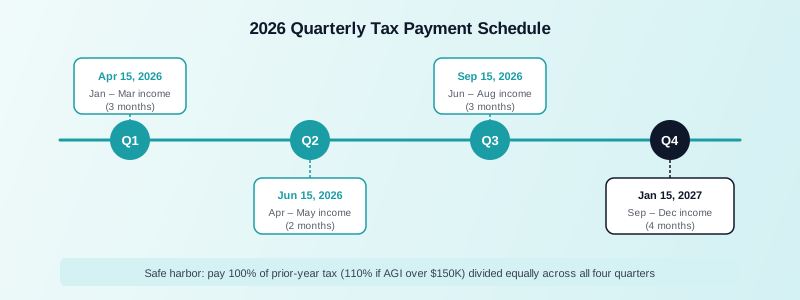
The IRS divides the year into four uneven payment periods. Here are the 2026 due dates:
| Quarter | Income Period | Due Date | |---|---|---| | Q1 | January – March | April 15, 2026 | | Q2 | April – May | June 15, 2026 | | Q3 | June – August | September 15, 2026 | | Q4 | September – December | January 15, 2027 |
Note that Q4 covers four full months, but the payment isn't due until January 2027. You can skip the January 15 deadline entirely if you file your full 2026 tax return and pay any balance by January 31, 2027.
The simplest way to pay is through IRS Direct Pay at irs.gov/payments. It's free, requires no registration, and pulls directly from your bank account. You can also use the Electronic Federal Tax Payment System (EFTPS) if you prefer scheduled recurring payments.
How to Set Money Aside So You're Never Caught Short
The biggest mistake freelancers make is spending all their income and scrambling for tax money at deadline time. A simple percentage-based system eliminates that problem.
Set aside 25–30% of every payment you receive into a separate savings account. For most freelancers, this covers both federal income tax and self-employment tax. If you're in a higher bracket or a high-tax state, push that to 35%.
The moment a client payment lands, transfer the percentage. Don't wait. Treating your tax reserve as untouchable is the only habit that works consistently.
Keeping clean income records throughout the year helps you fine-tune your withholding percentage. When you use Toggle Time Tracker to log every billable hour, your earnings data is always current, which makes it easy to check whether you're on track each quarter. Pair that with solid invoice records and you'll have everything you need to calculate payments accurately.
When you hit a slow month, resist the urge to skip the transfer. A bad quarter doesn't reduce what you owe on a good one — the IRS calculates penalties per period, not annually.
What Happens If You Miss a Quarterly Payment
Missing a payment or underpaying doesn't mean you go to jail. It means you pay a penalty.
The IRS underpayment penalty rate for 2026 is 7% annually, compounded daily on the shortfall. On a $2,000 underpayment for a full quarter, that works out to roughly $35–40. Not catastrophic, but it compounds and you pay it every quarter you're behind.
The penalty applies even if you're getting a refund when you file. The IRS checks each payment period independently, so paying double in December doesn't cancel an underpayment from April.
The three ways to avoid any penalty: owe less than $1,000 total when you file; pay at least 90% of your current-year tax through quarterly payments; or meet the prior-year safe harbor described above. Meeting any one of those three criteria gives you full penalty protection.
If you miss a deadline, pay as soon as you can. The penalty stops accruing the day your payment clears.
Stay Ahead of Freelance Quarterly Taxes All Year
Freelance quarterly taxes get easier once the system becomes a habit. Know your four due dates, use the safe harbor method to calculate your payments, and move a percentage of every payment into savings before you spend the rest.
The paperwork side is simpler when your income records are clean and organized from day one. Toggle Time Tracker gives you an accurate, real-time view of your billable hours and project earnings — exactly the data you need to make confident quarterly estimates without last-minute math.