What to Include in a Freelance Contract (Essential Checklist)
Working without a freelance contract is one of the most expensive mistakes you can make. Clients forget what they agreed to, scope balloons without extra pay, and late payments become arguments with no paper trail to back you up. A single unpaid project or a drawn-out scope dispute can cost more than a month of income. A clear contract prevents all of that before it starts.
Why Every Freelancer Needs a Contract
A contract is not about distrust — it is about clarity. Both you and your client know exactly what is expected, when it is due, and what happens if things go sideways.
Without a written agreement, disputes come down to one person's word against another's. With one, you have a document to point to. Clients who push back on signing a contract are often the same ones who push back on paying invoices.
A signed contract also signals professionalism. Clients take the project more seriously, communication becomes more structured, and the working relationship starts on equal footing. Every freelance project, no matter how small or how well you know the client, deserves a signed contract before you start work.
Do not wait until after the first call to draft one. Have a base template ready and send it with — or immediately after — your proposal. The faster a client signs, the faster you can begin with confidence.
Core Sections Every Freelance Contract Needs
A solid freelance contract covers six areas at minimum. Miss any one of them and you leave a gap that a client — or a misunderstanding — can slip through.
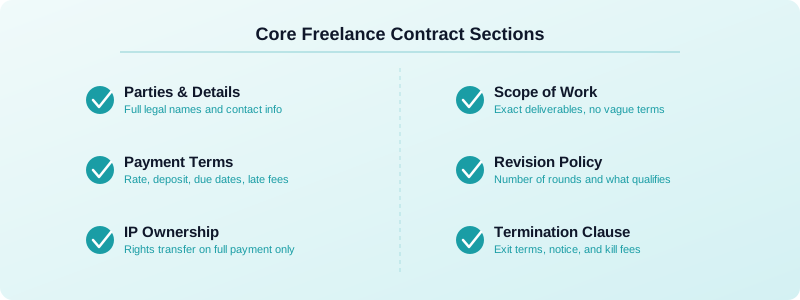
Here is what each section must include:
Parties and contact details. Full legal names, business names if applicable, and contact information for both sides. This establishes who the agreement is between.
Scope of work. A precise list of deliverables — not "website redesign" but "five-page website including homepage, about, services, contact, and blog index." Vague scope invites scope creep. If it is not listed, it is not included.
Payment terms. Rate, total project fee, deposit amount, and when each payment is due. Tie payment milestones to deliverable sign-offs where possible.
Revision policy. The number of revision rounds included and what counts as a revision versus a new request. Two rounds is standard for most creative work.
IP ownership. Who owns the work and when ownership transfers. The default should be: you retain ownership until the final invoice is paid in full.
Termination clause. How either party can end the contract, what notice is required, and what payment is owed for work completed to that point.
Most contracts also benefit from a governing law clause — one sentence that specifies which country or state's law applies if there is ever a legal dispute. It takes thirty seconds to add and saves significant confusion later.
When you are managing multiple freelance clients, having a contract template you can adapt quickly saves hours and keeps your business consistent across every engagement.
Payment Terms and Late Fees
Payment terms are where most freelance disputes originate. Your contract needs to be specific — "net 30" is not enough on its own.
Include the full project fee or hourly rate, the deposit percentage (50% upfront is common and recommended for new clients), and exact due dates for each payment milestone. State your preferred payment method and any processing fees you pass on.
Add a late fee clause. A standard approach is 1.5% per month on overdue balances, with a grace period of five to seven days. State the late fee explicitly — it changes client behavior and gives you leverage when chasing payment.
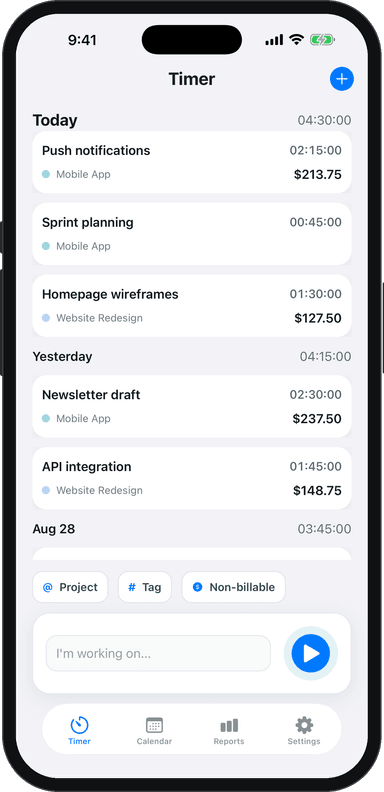
For hourly projects, your contract should also specify how you record and report time. Referencing a time-tracking tool in your contract sets the expectation that hours are logged and documented — not estimated after the fact. Connect all of this to your invoicing process so every invoice references the contract terms automatically and there are no surprises when payment comes due.
Scope of Work and Revision Limits
Scope creep is the slow drain that kills freelance profitability. A clear scope-of-work section is your primary defense, but a revision limit is your backup.
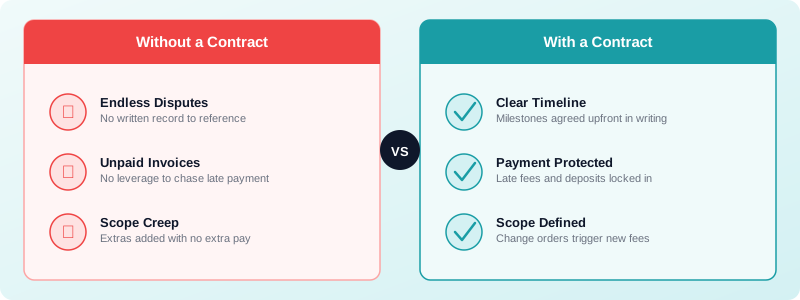
Define what is included in each revision round. A revision is a modification of the agreed deliverable — not a new direction, new feature, or additional page. If a client request falls outside the defined scope, it triggers a change order with a new fee and timeline.
Toggle Time Tracker makes scope disputes far easier to resolve. When you log every hour against a project, you have a timestamped record of exactly what work was done and when. If a client claims a deliverable was not completed, you can show the hours. That kind of evidence is only possible when you track time consistently throughout the project.
For a deeper look at keeping projects on track, read about preventing scope creep before it starts eating into your margins.
IP Ownership, Confidentiality, and Kill Fees
These three clauses protect you from situations that payment terms alone cannot cover.
IP ownership should state that all rights to work product transfer to the client only upon receipt of full payment. Until then, you retain ownership. This gives you real leverage if a client goes silent on a final invoice.
Confidentiality protects both parties. You agree not to disclose client business information; they agree not to share your rates, methods, or proprietary processes. A simple mutual NDA clause within the contract is usually sufficient for most freelance projects.
Kill fees apply when a client cancels a project mid-way. A standard kill fee is 25–50% of the remaining project value, depending on how far along the work is. Without a kill fee clause, you have no guaranteed compensation for time already invested when a client walks away.
Some freelancers also add a clause covering their right to display completed work in a portfolio, with the option for clients to opt out. This protects your ability to showcase your work without requiring permission after the fact — and it is far easier to negotiate before the project starts than after.
A complete freelance contract does not need to be a ten-page legal document. It needs to be specific, clear, and signed before any work begins. Cover scope, payment, revisions, IP, confidentiality, and termination — and you have the essentials covered.
Pair your contract with consistent time tracking and you have a complete system for running a professional, dispute-resistant freelance business. Download Toggle Time Tracker and start logging hours from day one of every project — so your records always match your contract.