How to Stay Focused Working from Home as a Freelancer
Working from home sounds ideal until you realize the fridge is ten steps away, your phone keeps buzzing, and nobody is watching whether you actually get anything done. If you want to stay focused working from home as a freelancer, you need more than willpower. You need systems that protect your attention before distractions even start. Studies show that after a single interruption, it takes an average of 23 minutes to fully refocus. Over a typical workday, that adds up to hours of lost billable time.
Why Freelancers Struggle to Focus at Home
Employees in offices have environmental cues that keep them on task. Colleagues nearby, scheduled meetings, and a physical separation between work and personal life all create guardrails. Freelancers working from home have none of that.
Three forces work against your focus every day:
- No external accountability. Nobody notices if you spend 40 minutes on social media between tasks.
- Blurred boundaries. Your workspace is also your living space. Laundry, dishes, and personal errands compete for attention all day.
- Decision fatigue. Without a set schedule, you spend mental energy deciding what to do next instead of doing it.
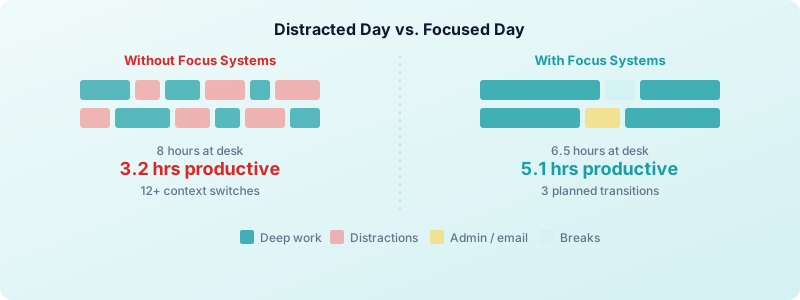
The result is a pattern many freelancers know well: sitting at your desk for eight hours but producing only three or four hours of real work. The gap between time spent and time productive is where income leaks out.
Set Up a Workspace That Signals Focus
Your environment shapes your behavior more than motivation does. A dedicated workspace tells your brain it is time to work, the same way your bed tells your brain it is time to sleep.
You do not need a separate room. A consistent desk or table in a quiet corner works. The key rules:
- Same spot every day. Your brain builds location-based habits. Working from the couch one day and the kitchen table the next never lets that habit form.
- Minimize visual clutter. A clean desk reduces cognitive load. Keep only what you need for the current task visible.
- Face away from household triggers. If you can see the TV or a pile of laundry from your desk, your attention will drift toward them.
- Use noise to your advantage. Noise-canceling headphones or background white noise block household sounds that pull you out of focus.
One freelancer tracked her productive hours for two weeks after moving from the couch to a dedicated desk. Her daily billable hours went from 3.8 to 5.2 without changing anything else about her schedule. Environment matters.
The room itself does some of the work. Freelance home office setup covers the changes that measurably help focus.
Block Distractions Before They Start
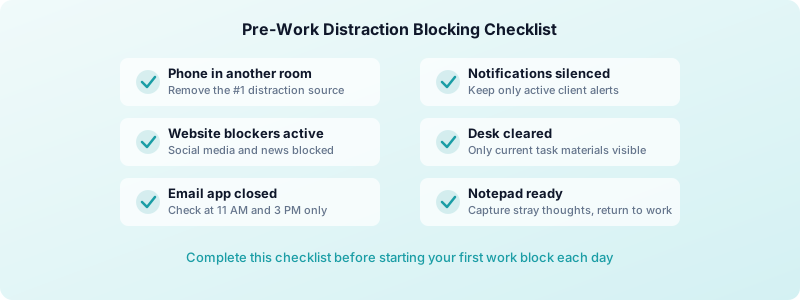
Relying on discipline to ignore distractions is a losing strategy. Your phone is engineered by teams of designers to grab your attention. Instead of fighting that pull in real time, remove the triggers before your workday begins.
Digital distractions:
- Put your phone in another room or in a drawer during deep work blocks.
- Use website blockers to cut off social media and news sites during work hours.
- Turn off all notifications except those from active clients.
- Close your email app and check it only at scheduled times, such as 11 AM and 3 PM.
Physical distractions:
- Handle household tasks before or after work hours, not during.
- Communicate your work hours to anyone who shares your home. A closed door or headphones can serve as a "do not disturb" signal.
- Keep a notepad next to your desk. When a personal to-do pops into your head, write it down and return to work. This "capture and release" technique prevents small thoughts from spiraling into 20-minute detours.
Pairing this approach with the Pomodoro technique creates natural checkpoints. Work for 25 minutes with zero distractions, then use the 5-minute break to check your phone or stretch.
Use Time Tracking to Find Your Peak Hours
Not all hours are equal. Most freelancers have two to three hours of peak cognitive performance each day. The problem is that most people do not know when those hours occur.
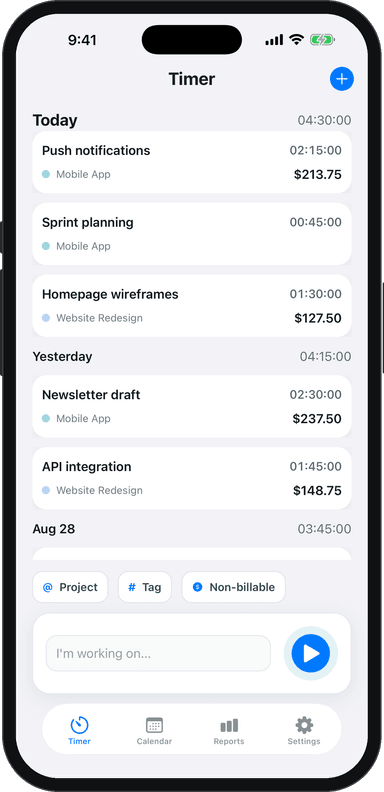
Track your time for one full week using Toggle Time Tracker. Tag each block with both the project and a simple energy rating: high, medium, or low. After seven days, patterns emerge. Maybe you are sharpest between 9 AM and 11:30 AM. Maybe your second wind hits at 2 PM.
Once you know your peak hours, protect them ruthlessly:
- Schedule your hardest, highest-value client work during peak hours.
- Move meetings, email, and admin tasks to low-energy windows.
- Never let a client call interrupt a peak focus block unless it is genuinely urgent.
This is one of the most effective time management strategies you can adopt. Freelancers who align their most demanding tasks with their natural energy cycles report getting the same amount done in six hours that previously took eight.
Build a Focus Routine That Sticks
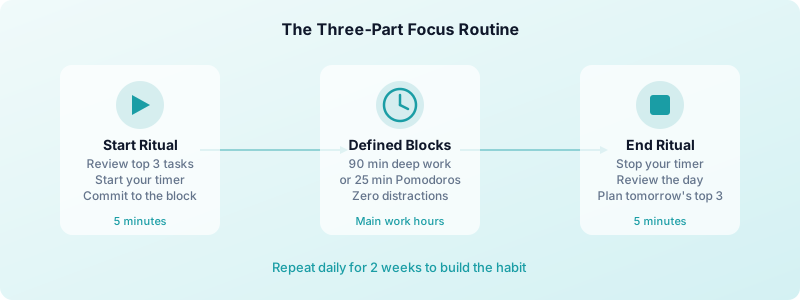
Systems beat willpower every time. Build a focus routine by stacking three habits together until they become automatic.
1. Start ritual (5 minutes). Open Toggle Time Tracker, review your top three tasks for the day, and hit start on your timer. The act of starting a timer creates a psychological commitment to the work block.
2. Work in defined blocks. Use 90-minute deep work sessions or 25-minute Pomodoro sprints. Pick one and stick with it for at least two weeks before switching. Consistency matters more than the exact duration.
3. End ritual (5 minutes). Stop your timer, review what you accomplished, and write tomorrow's top three priorities. This shutdown routine signals to your brain that work is done, which helps you actually disconnect. For more on structuring your entire day, see this guide to building a daily routine that works.
What to do when focus breaks down:
Bad focus days happen. When you notice you have been staring at the screen without making progress for 15 minutes, do not push through. Instead:
- Stand up and take a 10-minute walk.
- Switch to a lower-stakes task for 20 minutes.
- Review your time log to identify what derailed you.
The data from your time tracker turns bad days into learning opportunities. Over time, you start recognizing your distraction triggers and building defenses against them before they hit.
Staying focused as a freelancer working from home is not about having superhuman discipline. It is about designing your environment, blocking distractions proactively, knowing your peak hours, and following a repeatable routine. Track your time, review the data weekly, and adjust until focus becomes your default mode.
Download Toggle Time Tracker and start discovering your peak focus hours so you can get more done in less time.