The Freelance Morning Routine That Sets You Up to Win
When you work for yourself, no one rings a bell to start the day. That's the beauty of freelancing — and the danger. Without a consistent freelance morning routine, you drift. You check your phone before you're fully awake, react to the first email in your inbox, and wonder why by 11am you feel behind before you've really started.
A morning routine fixes that. It replaces reactive habits with intentional ones, so you arrive at your desk focused and ready to do your best work.
Why Your Morning Routine Matters More When You Work for Yourself
Employees have structure built in. Commutes, team meetings, and office rhythms all signal that the workday has begun. Freelancers have none of that.
Without external structure, mornings blur. You might start "working" at 8am but spend the first 90 minutes answering messages, scrolling social media, and handling whatever feels urgent in the moment. An hour later you still haven't touched your actual work.
Research consistently shows that the first two to three hours after waking are when cognitive performance — focus, creative thinking, problem-solving — is at its peak for most people. If you squander those hours on low-value tasks, you're spending your best mental currency on tasks that don't deserve it.
A structured morning routine also creates a psychological boundary. It signals to your brain that work time has begun. The structure is part of a broader freelance daily routine schedule that gives your whole day shape, not just your mornings.
The 4 Elements of an Effective Freelance Morning Routine
A morning routine for freelancer productivity doesn't need to be elaborate. It needs four things.
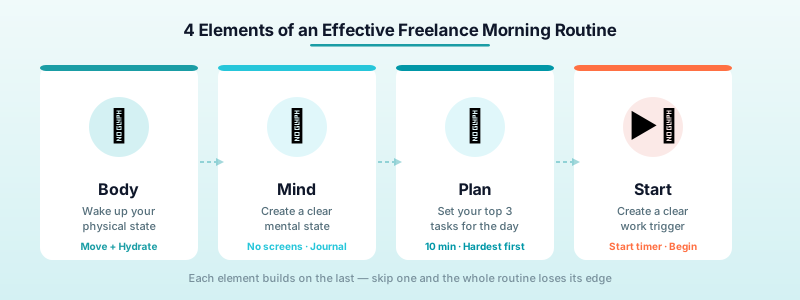
1. Body: Wake up your physical state
Before you open a laptop, do something physical. Drink a full glass of water — your body is dehydrated after sleep. Take a 10-minute walk, do a quick stretch, or do a short workout. Movement raises alertness and gets you out of the half-asleep fog faster than coffee alone.
2. Mind: Create a clear mental state
Avoid your phone for the first 20–30 minutes. Spend 5 minutes journaling or simply sitting quietly without a screen. This isn't about mindfulness for its own sake — it's about arriving at your desk without 15 other people's thoughts already occupying your head.
3. Plan: Set your priorities before you start
Spend 10 minutes reviewing your top 3 tasks for the day. Not your full to-do list — just the three things that matter most. Write them down. This small act focuses your morning energy on high-value work instead of whatever pops up first in your inbox.
Schedule your hardest task first, when your focus is freshest. That's when your brain handles complex thinking best. For more on matching work to your natural energy levels, see energy mapping for freelancers.
4. Start: Create a clear work trigger
You need a concrete signal that work has officially begun. This is where a simple ritual makes a real difference. The moment you sit down and hit the timer in Toggle Time Tracker on your first task, you've drawn a line. Before the timer: morning routine. After the timer: work. That single tap becomes a mental anchor that tells your brain to shift into focus mode.
A Sample Freelance Morning Routine (Adaptable to Any Schedule)
This example runs from 7am to 9:30am and can be compressed or expanded based on your schedule.
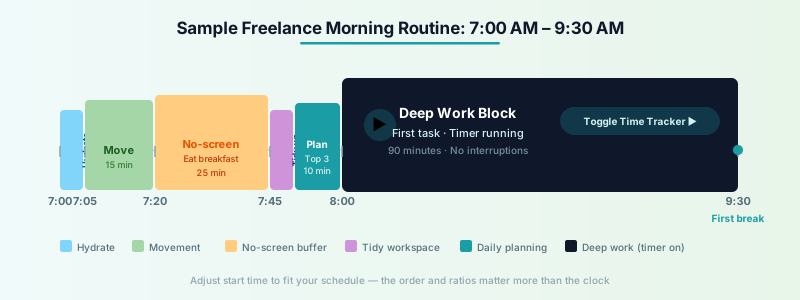
7:00 — Wake up and hydrate. Drink water before you look at your phone. Keep a glass by your bed if that helps.
7:05 — Light movement. A 15-minute walk, a short yoga session, or even 10 minutes of stretching. The goal is to wake up your body, not win a fitness award.
7:20 — No-screen time. Eat breakfast without a phone or laptop in front of you. This is your mental buffer before the day pulls you in.
7:45 — Quick tidy. Spend 5 minutes clearing your workspace. A cluttered desk creates low-grade cognitive friction. Start with a clean surface.
7:50 — Daily planning. Review your calendar and identify your top 3 tasks. Estimate how long each will take. This planning session should take 10 minutes, not 45.
8:00 — Start work. Open your first task, start your timer in Toggle Time Tracker, and begin. No inbox first, no social media — just the first task.
9:30 — First break. After a 90-minute focused block, take a proper break. Step away from the desk, get water, let your brain reset before the next block.
This work from home morning routine gets you into deep work within an hour of waking, without rushing. Adjust the start time to fit your life.
Common Morning Routine Mistakes Freelancers Make
Checking email or messages first thing. Your inbox is other people's priorities, not yours. If you read it before planning your day, you'll spend the morning reacting. Check it after your first focused work block — not before.
Skipping the planning step. It feels faster to just dive in. But starting without a plan means you'll spend mental energy deciding what to do while also trying to do it. Those 10 minutes of planning save 30 minutes of drift.
Making the routine too long. A 3-hour morning routine sounds impressive but creates a new procrastination trap. If your routine takes too long, you'll dread it and skip it. Aim for 60–90 minutes from wake-up to first work task.
Using the routine as avoidance. Morning routines can become a comfort zone. If you find yourself spending 45 minutes "planning" to avoid starting a difficult project, the routine isn't working anymore.
How to Build Your Routine and Make It Stick
Start small. Pick two or three habits from this post and do them consistently for two weeks before adding more. Trying to overhaul everything at once is how routines fail.
Anchor new habits to existing ones. If you already make coffee every morning, add your daily planning session immediately after. Pair the new behavior with the established one.
Track your first work start time for a week. If it keeps sliding later and later, the routine needs adjusting. If you're consistently at your desk within 90 minutes of waking, you're in good shape.
Part of making your routine stick is knowing how your morning connects to the rest of your day. Think of it as one half of a bracketed workday — your morning launch and your end-of-day shutdown ritual work together to give your freelance schedule a clear start and finish.
Over time, you'll also learn which mornings feel productive and which feel scattered. Pay attention to the patterns. Your freelance morning routine is a living system — build it, refine it, and protect it.
Download Toggle Time Tracker and use that first timer tap as your daily signal that work has begun. It takes one second, and it changes how the whole day feels.