Freelance Expense Tracking: 8 Tips to Stay Organized
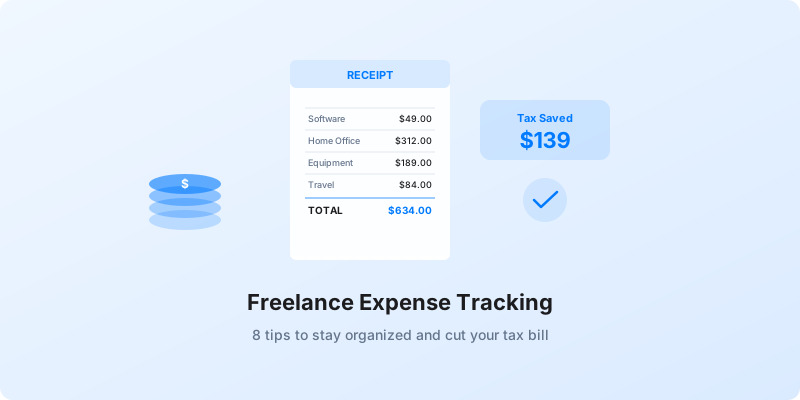
Freelance expense tracking isn't just a tax-season chore — it's one of the highest-leverage habits you can build as a self-employed professional. Done consistently, it can save you thousands of dollars a year. Done poorly, it leaves money on the table and creates stress every April.
If you've been meaning to get your system together, this guide gives you eight practical tips to start tracking smarter today.
Why Freelance Expense Tracking Matters All Year
Most freelancers think about expenses once a year — right before taxes. That's the most painful way to do it.
When you track throughout the year, you catch every deduction while the details are fresh. You also get a real-time picture of your actual profit, not just your revenue. A freelancer billing $80,000 a year but spending $20,000 on business expenses is running on $60,000 — and only pays self-employment tax on that net figure.
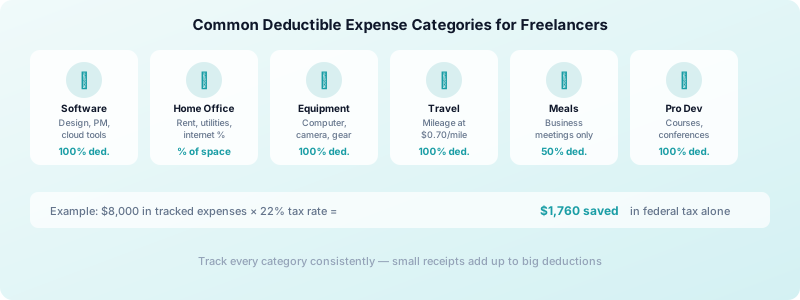
The IRS allows self-employed individuals to deduct "ordinary and necessary" business expenses from their taxable income. For a freelancer in the 22% tax bracket, every $1,000 in legitimate deductions saves roughly $220 in federal taxes — plus self-employment tax savings on top of that. Those small receipts add up fast.
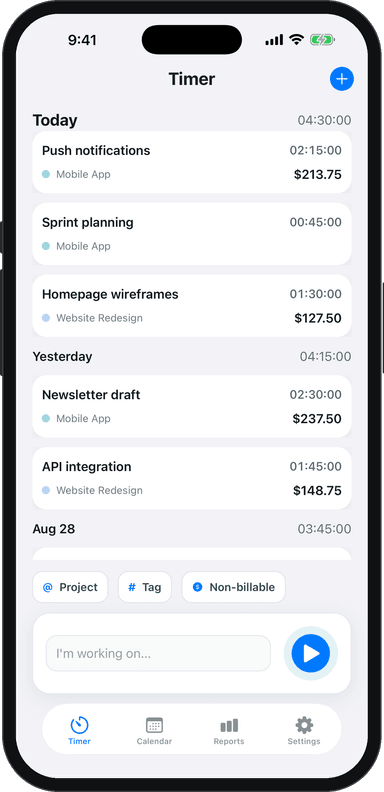
Pair your expense records with accurate time records and you have a complete financial picture. Toggle Time Tracker handles the time side — logging billable hours by project so you always know exactly what you earned. Add organized expenses and you have everything you need for taxes, invoicing, and financial planning.
What Counts as a Deductible Business Expense?
The general rule is simple: if the expense is ordinary in your field and necessary for your work, it's deductible. Here are the most common categories freelancers miss:
- Software and subscriptions — design tools, project management apps, cloud storage, stock photo subscriptions
- Home office — if you use a dedicated space regularly and exclusively for work, you can deduct a portion of rent or mortgage, utilities, and internet
- Equipment — computers, monitors, cameras, microphones, hard drives
- Professional development — courses, books, conferences, workshops
- Business meals — 50% deductible when the primary purpose is business
- Phone and internet — the business-use percentage of your monthly bill
- Marketing and advertising — your website, ads, portfolio hosting
- Professional services — accountant fees, contract review, legal consultations
For a full breakdown of what you can write off, see our guide to freelance tax deductions.
The Best System for Tracking Freelance Expenses
There's no single right system. The best one is the one you'll actually use consistently. Here's a proven approach that works for most freelancers:
1. Open a separate business bank account. This is the single most impactful step you can take. When business and personal finances mix, categorizing expenses becomes a painful manual process. A dedicated account means every transaction is automatically a business expense — or obviously not.
2. Use a dedicated business credit card. Run all business purchases through one card. You get an automatic monthly record, easier receipt matching, and often cash-back rewards on top.
3. Capture receipts immediately. Don't save them for later. Snap a photo the moment you make a purchase. A dedicated email folder for digital receipts works well too. Receipts over $75 are especially important to keep for audit purposes — but the habit of saving everything is smarter than trying to remember the threshold.
4. Log expenses weekly, not monthly. A 15-minute weekly review is far less painful than a four-hour monthly catch-up. Set a recurring calendar block — Friday afternoon works well — and clear your receipt backlog while the context is still fresh.
5. Keep records for at least three years. The IRS can audit returns up to three years back in most cases. If you claim a significant loss, keep records for seven years. Digital storage is perfectly acceptable — a simple folder structure organized by year and category is enough.
How to Categorize Expenses the Right Way
Consistent categories are what make your records usable — both for tax prep and for understanding your business.
Stick to a category system and don't change it month to month. Shifting labels mid-year makes year-over-year comparisons impossible.
A practical set of categories for freelancers:
- Software & Subscriptions
- Hardware & Equipment
- Home Office
- Phone & Internet
- Travel & Transportation (including mileage at $0.70/mile for 2025)
- Meals & Entertainment (business only, 50% deductible)
- Professional Development
- Marketing & Advertising
- Professional Services
- Office Supplies
For mixed-use expenses — like a phone you use for both work and personal reasons — track the business-use percentage and only deduct that portion. Document your reasoning in a note on the expense record.
Tag expenses by client or project where it makes sense. This is especially useful when you need to justify costs on a specific engagement or reconcile project profitability. When you also track your time with Toggle Time Tracker, you can compare project hours against project expenses to see which clients are truly most profitable.
Common Expense Tracking Mistakes to Avoid
Even freelancers with good intentions make these errors. Knowing them in advance saves you real money.
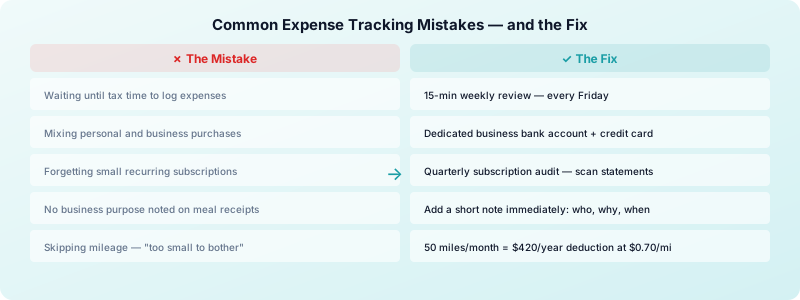
Waiting until tax time. By then, receipts are lost, context is forgotten, and you're probably missing dozens of legitimate deductions. Build the habit of tracking weekly.
Mixing personal and business expenses. Even one or two personal charges on your business account can create headaches in an audit. Keep the accounts clean.
Forgetting small recurring charges. A $15/month stock photo subscription, a $10/month cloud storage plan, a $20/month scheduling tool — these add up to hundreds of dollars a year. Audit your bank statement and credit card once a quarter specifically looking for recurring charges you might have missed.
Not documenting the business purpose. For meals and entertainment especially, write a brief note: "Client call prep, coffee with Sarah from Acme Co." A vague receipt is harder to defend.
Ignoring mileage. If you drive to client meetings, a coworking space, or supply runs, those miles are deductible. At $0.70/mile, a modest 50 miles per month adds up to $420 in deductions per year.
Skipping the home office deduction. Many freelancers avoid it out of fear it triggers an audit — that myth has largely been debunked. If you have a dedicated workspace, claim it.
Good expense records also make your invoicing process much cleaner. When you know exactly what you spent on a project — and exactly how many hours you put in — building an accurate, professional invoice is straightforward. See our guide on how to invoice as a freelancer for the full billing workflow.
Build the Habit, Cut the Stress
Solid freelance expense tracking comes down to three things: a clean system, consistent habits, and the right tools.
Open a dedicated business account, capture receipts as they happen, and do a short weekly review. Combine that with accurate time records — Toggle Time Tracker logs every billable hour so you always know what your time is worth — and you'll walk into tax season with clean books, maximum deductions, and none of the scramble that comes from putting it off.
If you want to go deeper on the time side, check out our guide on tracking billable hours as a freelancer for a practical workflow that pairs perfectly with your expense system.
Download Toggle Time Tracker and start building the complete financial picture your freelance business deserves.