How to Recognize When You Need a Break from Freelancing
Freelancers are notoriously bad at taking breaks. There's no HR department scheduling your time off, no team to cover for you while you're out, and the financial anxiety of "I'm not earning when I'm not working" makes rest feel like a luxury. But learning to recognize when you need a break from freelancing is a survival skill — because the alternative is burnout, which costs far more than a week away from your desk.
Warning Signs You Need a Break
These signs often appear gradually, which is why they're easy to rationalize away until they become serious:
Creative or cognitive work feels effortful in a new way. There's normal difficulty (hard problems require focus) and there's exhaustion-based difficulty (you can't summon the energy to care). If work you usually enjoy now feels like pushing through mud, that's a signal.
You're irritable with clients you normally like. When reasonable client requests start feeling like attacks, your emotional buffer is depleted. This is one of the earliest and most reliable warning signs.
Your output quality is slipping and you know it. You're submitting work you know isn't your best because you can't summon the energy for one more revision. You're making errors you wouldn't normally make.
You're working longer hours to produce the same output. Instead of doing 4 hours of solid work, you're putting in 8 hours and still not finishing. This is a classic burnout productivity loop.
You've stopped doing anything non-work-related. When's the last time you did something genuinely enjoyable that had nothing to do with work? If you can't remember, that's a warning sign.
For more on the mechanics of burnout and how to prevent it, see how to avoid burnout as a freelancer.
The Difference Between Tired and Burned Out
Not every feeling of fatigue means you need a week off. Distinguishing between normal tiredness and genuine burnout helps you respond proportionately:
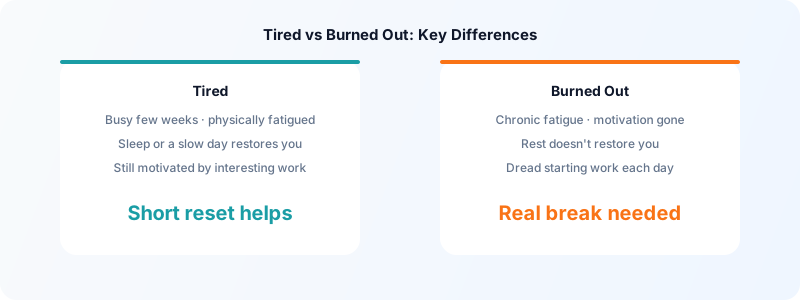
Tired: You've had a busy few weeks and feel physically fatigued. A good night's sleep, a slower Friday, or a weekend with no work email will restore you.
Burned out: The fatigue is chronic, motivation has evaporated, and rest doesn't seem to help much. You might feel detached, cynical, or have a persistent sense of dread about starting work.
If you're tired, a short reset helps. If you're burned out, you need a genuine break — not just a weekend, but planned time off where you're not checking in.
How to Audit Your Work Hours
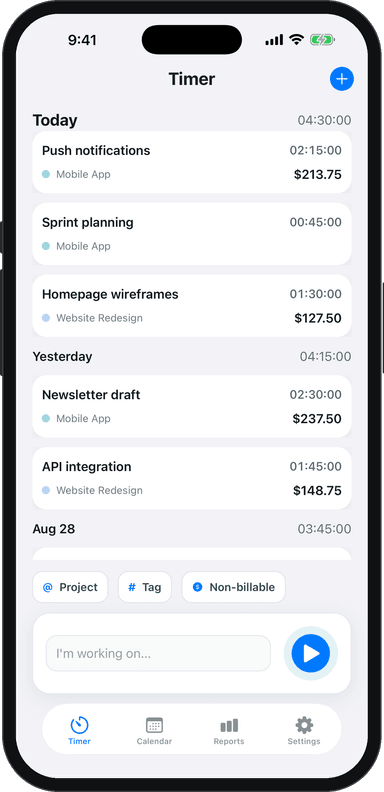
One concrete way to detect overwork early: track your hours. If you've been logging 55+ hours per week for three consecutive weeks in Toggle Time Tracker, your weekly review will show you that data directly — before the physical symptoms show up.
Most freelancers work more than they realize because there's no clock to punch out on. A time tracker creates the accountability that office hours provide automatically. When you see the data, you can act on it.
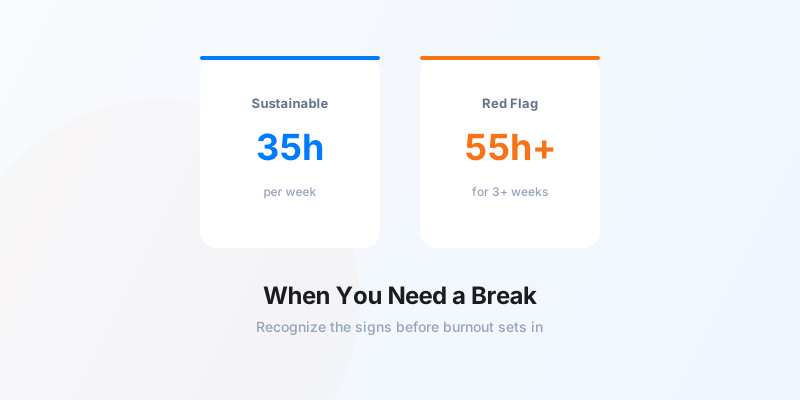
For most freelancers, 35-40 hours per week is sustainable long-term. 45+ hours is yellow-flag territory. 55+ hours for more than 2-3 weeks is a red flag.
Also pay attention to quality of work sessions, not just quantity. You can log 35 hours and still be running on empty if those hours were fragmented, distracted, or low-output. The signs that you're overworking as a freelancer go beyond just hours.
What a Break Actually Looks Like
"Take a break" is vague advice. Here's what it looks like in practice for freelancers:
A short reset (1-2 days):
- No work email or Slack
- No project thinking
- Physical activity or a genuine change of environment
- Sleep, good food, social contact
This resets acute tiredness but doesn't address chronic burnout.
A real break (5-10 days):
- Give clients at least 2 weeks' notice for anything time-sensitive
- Set an out-of-office response
- Hand off any urgent items
- Genuinely disconnect — no checking in "just to make sure"
Planning this kind of break requires financial cushion. Building a freelance emergency fund (covering 3-6 months of expenses) is what makes genuine time off possible without financial panic. See how to build a freelance emergency fund for the mechanics.
Sabbaticals or slow seasons (weeks to months): For longer burnout or a desire to recharge direction, some freelancers build deliberate slow seasons — periods with lighter client loads, fewer hours, or no new projects. This is easier to sustain if you've priced your work well enough that peak periods generate enough income to cover quieter ones.
How to Take Time Off Without Losing Clients
The fear of losing clients is the biggest barrier to taking a break. But handled correctly, time off rarely damages relationships:
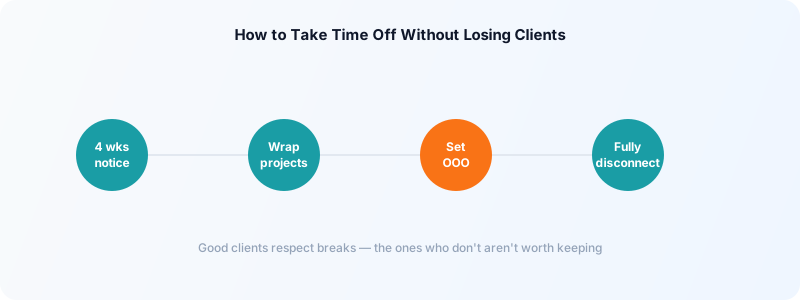
- Give advance notice — 2 weeks is good, 4 weeks is better for longer breaks
- Set clear expectations — "I'll be unavailable from X to Y. [Contact for urgent matters]"
- Ensure handoffs are complete — wrap up or pause active projects before you go
- Set an autoresponder — your out-of-office message handles inquiries professionally in your absence
Most good clients understand that their freelancer needs time off. The ones who don't are usually clients you're better off losing.
Prevention Is Better Than Recovery
The best strategy isn't learning to recover from burnout — it's building a work style that prevents it. That means:
- Defined work hours you actually stop at
- Regular short breaks built into your week
- A time tracker that shows you when you're overworking
- An emergency fund that makes genuine rest financially possible
None of this requires taking more time off than you want to. It just requires being intentional rather than reactive.
Download Toggle Time Tracker and check in on your weekly hours regularly — catching overwork early is far easier than recovering from burnout.